
An ADHD Kitchen Reset for Days When the Dishes Keep Piling Up
Restore a usable kitchen when dishes pile up. Follow an ADHD-friendly reset for the sink, food preparation space, and a small next-meal kit.
 AuthorVitaly Chopik
·7 min read

In brief
What to take away
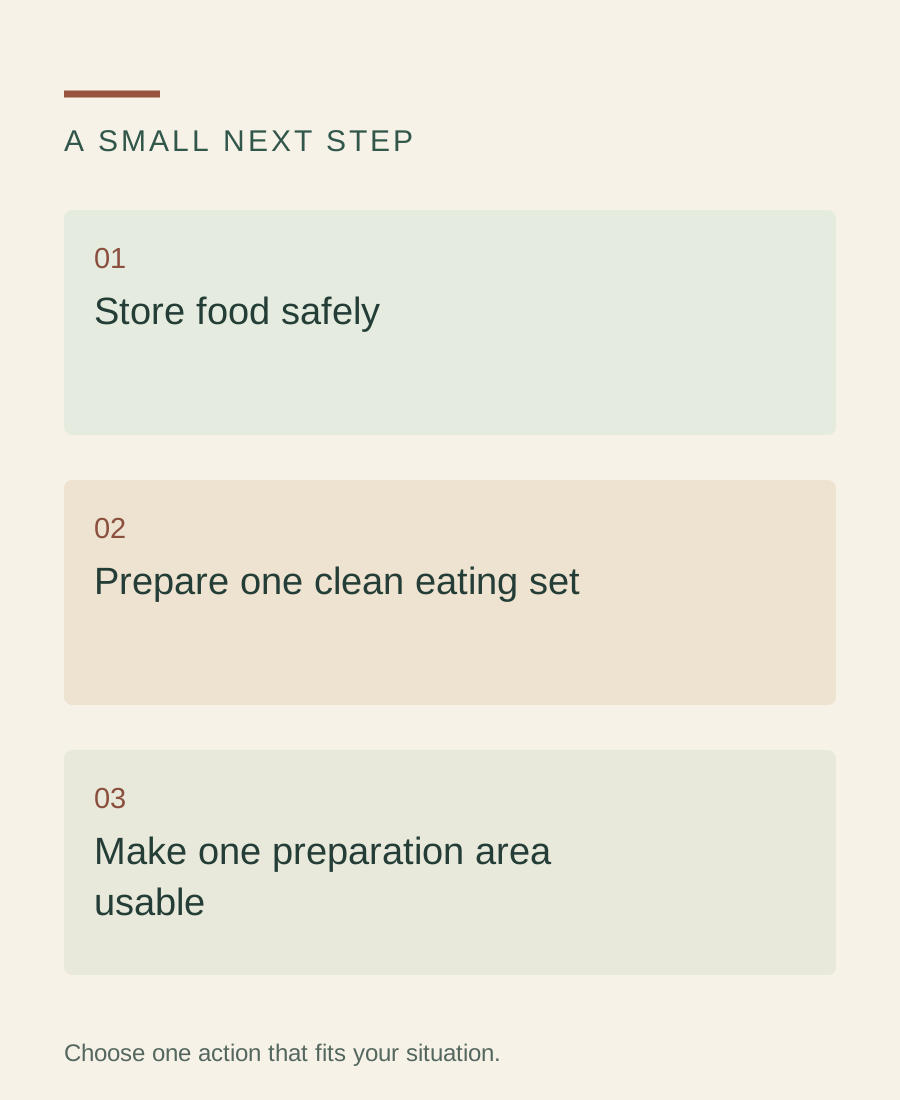
- Store food safely.
- Prepare one clean eating set.
- Make one preparation area usable.
Restore a kitchen you can use for the next meal
When dishes have accumulated, an ADHD kitchen reset can focus on three outcomes: food stored safely, a usable place to prepare something, and enough clean equipment for the next meal. You can complete those outcomes without reorganizing the cupboards or washing every object in the room.
Start by naming the next meal and the equipment it needs. A bowl, spoon, and clear section of counter may be enough. This keeps the reset connected to a real need rather than an undefined demand to “get the kitchen under control.”
These are practical household suggestions. They do not treat ADHD or establish why the kitchen has become difficult. Pain, fatigue, limited space, financial pressure, depression, and caring responsibilities can all affect the work involved.
Separate food safety from visual tidiness
Put perishable food into appropriate storage promptly. Check questionable food using reliable food-safety guidance rather than taste or smell alone. Food that looks normal is not necessarily safe. If you cannot establish how it has been stored, avoid guessing.
Keep raw-food contamination, broken glass, chemical spills, pests, and blocked access separate from ordinary clutter. Some situations require appropriate protective equipment or practical help. Follow cleaning-product labels and never mix products.
For storage questions, the FoodSafety.gov cold-storage chart gives item-specific guidance. This article does not replace those instructions or the instructions on food packaging.
Use a short reset sequence
- Make access safe. Move bags and unstable objects away from the route you need. Keep the sink and floor accessible without creating a new obstacle elsewhere.
- Put food away. Handle perishables and obvious food waste before sorting unrelated items.
- Choose one preparation area. Clear a section large enough for the next meal. Place unrelated belongings in one small container to return later.
- Choose the next-meal kit. Select the dishes and utensils needed, rather than beginning with whatever happens to be nearest.
- Wash that kit and clean the selected surface. Use methods suitable for the materials and food-contact area.
- Close the session. Put supplies away safely, check taps and appliances, and leave the next useful step visible.
If you have a dishwasher, a workable load may be easier than waiting for the perfect arrangement. Follow the appliance instructions and avoid overloading. If washing by hand is difficult, consider whether a stool, a suitable brush, gloves you tolerate, or assistance would make the task more accessible.
Choose a version that fits today’s capacity
| Capacity today | Useful outcome | What can wait |
|---|---|---|
| Very limited | Safe food storage, clear route, one clean eating set | Cupboard organization and decorative surfaces |
| Some capacity | Next-meal kit plus one preparation area | The full collection of dishes |
| More capacity | Clear the sink, process a workable dish load, reset supplies | Deep cleaning and rearranging storage |
Do not treat the largest version as the only successful one. You can also split a reset across people or sessions. Someone may gather dishes while another handles the washing, with each role agreed in advance.
If you are struggling to meet essential food or hygiene needs, ask for practical support. A smaller list cannot solve lack of access to equipment, a broken appliance, or a health problem that makes standing and washing painful.
An example: making lunch before a work call
Imagine you have a call soon and have not eaten. The sink is full, the worktop holds mail, and several containers need checking. The immediate outcome is making lunch safely and having somewhere to eat it.
Put perishables away and deal with food that clearly cannot be kept. Move the mail to a bounded tray without opening it. Wash the bowl and utensil you need. Clear and clean enough worktop to prepare the food. Leave the remaining dishwashing as the next task rather than attempting it while hungry and watching the clock.
After eating, the next action might be “load the plates beside the sink.” That is a clear restart point. “Finish kitchen” asks you to reconstruct the whole job again.
Reduce the bottleneck that keeps returning
Notice where the sequence repeatedly stops. If clean dishes remain on the draining board, perhaps storage is crowded or inconvenient. If washing does not start, finding the brush or tolerating the sensation may be the main obstacle. If food becomes invisible, a clearer storage layout may help more than another reminder.
Change one bottleneck first. Keep appropriate supplies accessible, reduce duplicate equipment if you want to, or agree a shared standard for the sink. Do not buy new storage before checking what problem it needs to solve.
For recurring shopping omissions, use the grocery-list guide. For clothes that stop at the put-away stage, the laundry guide applies the same useful question: which step is preventing the whole system from moving?
A small closing checklist
- Food is stored according to appropriate safety guidance.
- The route and selected preparation area are usable.
- The next eating set is clean or available.
- Cleaning supplies are stored safely.
- Appliances and taps are left in a safe state.
- The remaining task has a concrete next action.
If kitchen difficulty is part of a major change in daily functioning, discuss the broader pattern with a qualified professional. Our executive dysfunction overview explains why a specific task problem can be useful information without being a diagnosis.
Download the action sheet
Frequently asked questions
Do I have to empty the sink before preparing food?
You need a safe way to prepare food and clean the equipment required. An entirely empty sink may be helpful, but it is not the only possible outcome. Keep food-contact surfaces safe and avoid contaminating food while handling dirty dishes.
Is soaking everything the easiest first step?
Not necessarily. Follow the material and appliance guidance, and do not leave sharp objects hidden in water. A large soaking project can create another task if you cannot finish it. Select the items you need and keep the process contained.
What if I cannot tolerate washing dishes?
Identify the specific difficulty: pain, standing, noise, smell, wet hands, texture, or the number of steps. Suitable equipment, a different position, agreed help, or another safe method may reduce the barrier. If access or health needs are substantial, seek individualized support.
Does a messy kitchen mean I am irresponsible?
No. It means there is work to do and a system or circumstance to understand. Focus on safe food and practical access first. Responsibility can include asking for help and changing the setup rather than completing every task alone.
Evidence base
Sources
Continue reading

What Is Executive Dysfunction? An Everyday Guide
Executive dysfunction means difficulty using mental skills that help you plan, start, switch, remember, and finish. See concrete examples and ways to reduce friction.
· 6 min read
An ADHD laundry system for clothes that never get put away
A simple ADHD laundry system for clean clothes that stay in baskets. Plan washing, drying and storage around the step that actually stalls.
· 6 min read
ADHD Paralysis: What Feeling Stuck Can Mean
ADHD paralysis is an informal name for feeling stuck despite wanting to act. Sort choice, start, transition, and overwhelm barriers to find a useful next move.
· 5 min read