
A Low-Energy Cleaning Plan for ADHD Burnout Days
Use a low-energy ADHD cleaning plan that puts safety, food, and one usable surface first, with clear limits and ways to ask for practical help.
 AuthorVitaly Chopik
·7 min read

In brief
What to take away
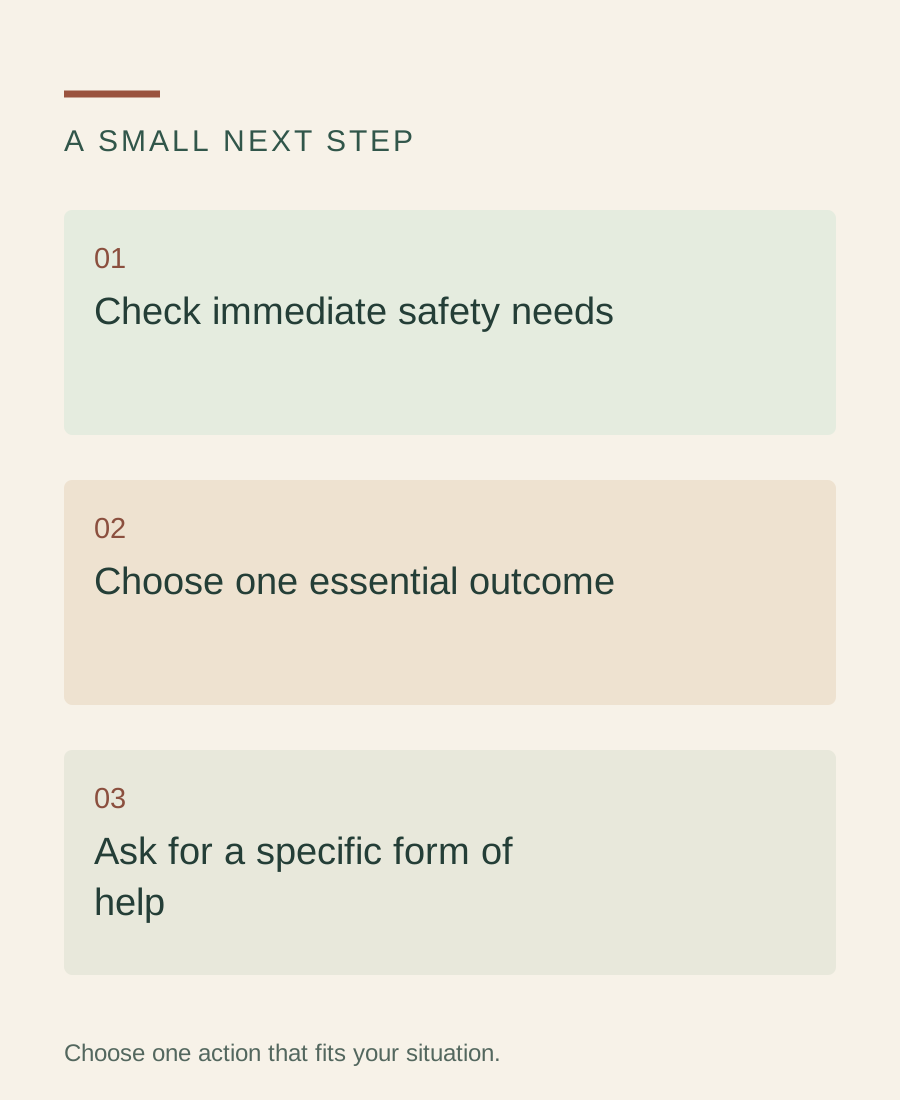
- Check immediate safety needs.
- Choose one essential outcome.
- Ask for a specific form of help.
Choose safety and basic use first
On a low-energy day, an ADHD cleaning plan can shrink to a safety and function minimum: keep essential routes clear, handle food appropriately, and make one necessary area usable. Stop before the plan becomes a full-house reset disguised as a short checklist.
People sometimes describe these as “ADHD burnout days.” That phrase can name a real experience of exhaustion, but it is not a separate formal ADHD diagnosis. Fatigue and reduced self-care can also reflect depression, sleep problems, physical illness, pain, medication effects, or excessive demands.
This guide offers practical ways to reduce household work while you seek or use appropriate support. It does not establish the cause of exhaustion, and it should not be used to push through symptoms that need medical attention.
Check whether today’s problem needs help first
Before choosing chores, ask whether you can safely do them. Dizziness, severe pain, significant weakness, breathing difficulty, or other concerning symptoms can change what is appropriate. Sudden or severe symptoms require medical attention rather than a modified cleaning routine.
Notice practical hazards: a blocked exit, food that needs safe storage, a spill causing a slip risk, or something dangerous within reach of a child or pet. Address those with help where needed. A hazardous cleaning job is not made manageable merely by setting a shorter timer.
If your living situation is repeatedly unsafe or essential needs are not being met, seek practical assistance. A small plan should connect you to support, not hide the scale of the problem.
Use a short priority ladder
| Priority | Examples | Possible response |
|---|---|---|
| Immediate safety | Blocked exit, dangerous spill, unsafe appliance | Make safe or ask for suitable help |
| Food and essential care | Perishables, necessary eating equipment, pet or dependent care | Complete the smallest safe version or arrange assistance |
| Basic access | Route to bed or bathroom, usable place for necessary work | Clear one bounded area |
| Comfort and appearance | Sorting shelves, arranging decor, deep organization | Leave for another day |
The categories are prompts, not a universal order for every household. A person’s disability or care responsibilities may make a particular task essential that would be optional elsewhere.
Choose one action from the highest relevant category. Reassess after it, rather than automatically moving down the entire ladder.
Reduce the action before you begin
“Do laundry” may become “put the needed clothes into one accessible container.” “Clean the kitchen” may become “wash the bowl needed for food.” “Tidy the bedroom” may become “clear the route to the bed.”
The smaller action should have an ending you can recognize. Avoid wording such as “just do a bit,” which can leave you deciding continuously whether you have done enough.
If standing, reaching, or lifting is difficult, adapt the method only where safe. Use an appropriate seated position, accessible equipment, or another person’s help. Do not carry more than you can safely manage because making a second trip feels inefficient.
You can also reduce the number of decisions. Put one ordinary waste bag and one small return container nearby instead of arranging a complex sorting system. Leave uncertain items alone unless they contain an urgent safety or deadline issue.
Ask for a concrete form of help
A specific request gives another person something they can agree to. For example:
- “Could you take this sealed bag to the outside bin?”
- “Could you wash these two items so I can prepare food?”
- “Could you clear this route with me? Please check before moving private belongings.”
- “Could we agree who handles the kitchen tonight? I cannot manage the full task.”
The helper does not need to assess whether you are trying hard enough. At the same time, shared responsibilities need honest communication. Tell the relevant person what cannot be completed and discuss an alternative rather than leaving them to discover it.
If no informal help is available, consider local support services, disability resources, housing support, or affordable practical assistance where available. Lack of support is a real constraint, not a planning error.
Close the session without creating another demand
When the selected outcome is reached, put supplies somewhere safe and stop. If something remains open, leave a short note naming the next action. Do not use the moment of slight improvement as a reason to begin a larger project automatically.
An example: you clear the bathroom route and make the eating area usable. The desk remains cluttered. The closing note says, “Next available day: collect papers from the desk into the action tray.” It does not say, “Catch up on the whole house.”
If even the minimum was too much, reduce the next attempt and seek more support. A pattern of repeatedly exceeding your capacity is information about demand, health, and resources.
When the low-energy days keep returning
Persistent or worsening exhaustion deserves assessment, particularly when sleep, appetite, mood, work, relationships, or personal care are affected. Do not assume that an ADHD label explains every new symptom. Our ADHD, anxiety, and depression guide describes why coexisting difficulties matter.
Look at recurring demands as well as symptoms. Are you doing all household coordination, working beyond available capacity, or lacking rest and accessible tools? A sustainable plan may require changing responsibilities, treatment, accommodations, or practical support.
For the broader distinction between exhaustion language and depressive symptoms, read burnout versus depression. For a specific clothing bottleneck, the laundry guide can reduce unnecessary stages without turning a low-capacity day into a system overhaul.
Download the action sheet
Frequently asked questions
Is doing only the minimum enough?
It can be the appropriate plan for today. The minimum protects immediate needs; other work still needs a realistic longer-term arrangement. If essential hygiene or safety cannot be maintained, seek help rather than relying indefinitely on a plan that is too small for the situation.
Should I force myself to clean to get momentum?
A small action sometimes helps, but it is not a universal answer. Consider health, safety, and actual capacity first. If beginning a task repeatedly leads to overexertion or worsening symptoms, reduce the demand and discuss the pattern with an appropriate professional.
How do I explain the reduced plan to someone I live with?
Name what you can do, what you cannot do, and what needs another arrangement. Agree on a concrete minimum and a review point. Avoid making the conversation a debate about whether either person is sufficiently motivated.
When should I seek medical advice about exhaustion?
Seek advice when fatigue is persistent, worsening, unusual for you, or affecting daily functioning. Sudden severe symptoms or immediate safety concerns need urgent attention. A clinician can consider sleep, mood, physical health, medication, and other explanations alongside ADHD.
Evidence base
Sources
Continue reading

What Is Executive Dysfunction? An Everyday Guide
Executive dysfunction means difficulty using mental skills that help you plan, start, switch, remember, and finish. See concrete examples and ways to reduce friction.
· 6 min read
An ADHD laundry system for clothes that never get put away
A simple ADHD laundry system for clean clothes that stay in baskets. Plan washing, drying and storage around the step that actually stalls.
· 7 min read
ADHD Paralysis: What Feeling Stuck Can Mean
ADHD paralysis is an informal name for feeling stuck despite wanting to act. Sort choice, start, transition, and overwhelm barriers to find a useful next move.
· 5 min read