
ADHD Meal Prep for People Who Don’t Want the Same Lunch Every Day
Try ADHD meal prep with reusable components, varied lunches, a short preparation session, and food-storage reminders that make leftovers easier to use.
 AuthorVitaly Chopik
·7 min read

In brief
What to take away
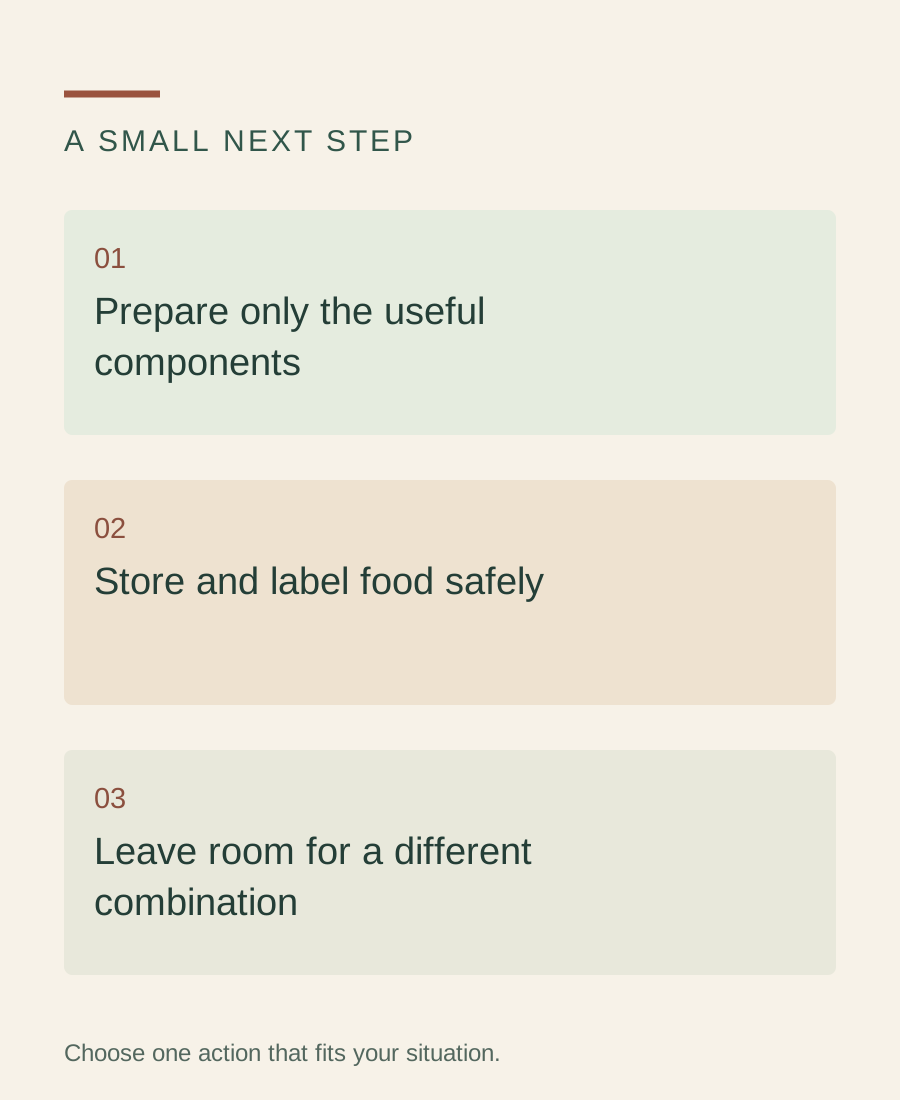
- Prepare only the useful components.
- Store and label food safely.
- Leave room for a different combination.
Prepare components you can combine differently
ADHD meal prep does not have to mean five identical containers of lunch. You can prepare a small number of components, store them safely, and choose how to combine them when you eat. Keep some options uncooked or ready to assemble so the plan still works if you do not complete a large preparation session.
For example, a familiar cooked base, a tolerated protein source, vegetables, and separate flavor options can become different meals. The exact foods should fit your preferences, access, allergies, culture, and any clinical dietary advice.
This guide is about reducing preparation and decision demands. It does not recommend a special ADHD diet or a nutritional treatment. If appetite, food restriction, swallowing, weight change, or medication effects are affecting eating, seek appropriate individualized advice.
Choose what is actually worth preparing
Look at the work that prevents you from eating: chopping, washing equipment, deciding what goes together, waiting for food to cook, or cleaning afterward. Preparing the wrong part may create work without removing the barrier.
If chopping is the bottleneck, a prepared or frozen ingredient may help. If the problem is deciding, a short list of combinations may matter more than cooking ahead. If leftovers become unappealing, prepare less and keep a different low-effort option available.
Distinguish meal planning from meal prep. Planning chooses the available meals; preparation does some of their work early. Our grocery-list guide addresses a third task: getting the needed items home.
Build a small component set
Choose a manageable amount rather than preparing every category automatically. Start with one or two components if that is enough to reduce friction.
| Component | Possible use | Choice left for later |
|---|---|---|
| A familiar cooked base | A bowl, side dish, or soup addition | Portion and combination |
| A suitable protein option | Wrap, sandwich, bowl, or snack plate | Texture and flavor |
| Vegetables or fruit you tolerate | Side, filling, or separate item | Whether to combine or keep separate |
| Sauce or seasoning | Change a familiar format | Flavor intensity |
| A ready-to-eat backup | A meal when assembly still feels difficult | Whether to use the prepared components today |
The examples are not a complete nutritional plan. You can keep foods separate if mixed textures are difficult. You do not need to use every ingredient in a single meal.
Use a session with a clear ending
- Choose the next few eating occasions. Do not begin by planning a month of food.
- Check storage guidance and space. Have suitable containers and room to refrigerate or freeze what you prepare.
- Choose a limited set of tasks. Name them: cook one component, wash one ingredient, portion one snack.
- Use a familiar sequence. Avoid trying several new recipes at once when attention or capacity is limited.
- Store promptly and label clearly. Include the information needed to know what it is and when it was prepared.
- Close the kitchen. Put equipment and ingredients away safely and leave the next meal easy to find.
Preparation, storage, and cleanup are all part of the session. Leave capacity for the final steps rather than using all available energy on cooking.
Keep food safety separate from convenience
There is no universal rule that a week of prepared food is safe in the refrigerator. Different foods have different storage requirements. The FoodSafety.gov cold-storage chart lists guidance for specific categories; many cooked meat or poultry leftovers are listed for three to four refrigerated days under appropriate conditions.
Follow food-specific instructions for cooling, refrigerating, freezing, thawing, and reheating. Labeling helps memory but cannot make unsafe storage safe. When the history of a food is uncertain, do not taste it to test safety.
Keep raw-food handling separate from ready-to-eat ingredients and clean food-contact surfaces appropriately. If preparing several items feels too complicated to do safely, simplify the session or seek help rather than relying on speed.
A worked example for varied lunches
Suppose you enjoy wraps and bowls but become bored with an identical lunch. You prepare a familiar component that works in both, keep a tolerated filling available, and store sauces separately. One day you assemble a wrap; another day you use the same components in a bowl with a different flavor.
You prepare only an amount that fits the safe storage plan. A backup meal remains available if you want something else or cannot assemble lunch. If several components remain unused, the next session becomes smaller rather than more ambitious.
The successful outcome is easier access to meals you actually eat. It is not the number of matching containers or the amount of cooking completed on a Sunday.
Troubleshoot waste, boredom, and forgotten containers
If containers disappear in the fridge, give current food a visible location and keep the list short. If labels are hard to maintain, choose an accessible format you can use during preparation. If a shared household uses the food, agree what is available and who updates the list.
If food becomes boring, change the combination, flavor, or temperature only where safe and suitable. If textures change during storage in ways you dislike, choose different components or prepare closer to eating. Sensory preferences are information for planning, not a failure of effort.
If cleanup prevents the next session, reduce equipment and batch size. For a kitchen that has become difficult to use, begin with one preparation area and the next-meal equipment. The executive dysfunction guide can help you identify which step needs external support.
Download the action sheet
Frequently asked questions
Do I need to meal prep on the weekend?
No. Choose a time that fits your work, energy, and storage needs. A small preparation step before an ordinary meal can be more realistic than a long weekly session. You can also use prepared ingredients without batch cooking.
How long can I keep prepared food?
It depends on the food and storage conditions. Follow reliable food-specific guidance and package instructions. Do not assume that every prepared meal lasts for the whole week. Use freezing where appropriate and keep the storage history clear.
What if I do not like leftovers?
Prepare components that retain an acceptable texture, use smaller amounts, or choose assembly options instead. You do not need to train yourself to tolerate a particular lunch to have a workable food system.
Is buying pre-cut or prepared food cheating?
No. It can remove a step that otherwise prevents you from eating. Cost, access, packaging, dietary needs, and preference may influence the choice. The useful question is whether the option fits your circumstances and makes food easier to obtain and use.
Evidence base
Sources
Continue reading

An ADHD grocery list for the things you only remember after getting home
Capture groceries in one place, group the list by your route and decide what to do with unavailable items before a shopping trip becomes overwhelming.
· 5 min read
What Is Executive Dysfunction? An Everyday Guide
Executive dysfunction means difficulty using mental skills that help you plan, start, switch, remember, and finish. See concrete examples and ways to reduce friction.
· 6 min readDecision Fatigue: Why Small Choices Feel Hard When You’re Overwhelmed
Decision fatigue is a useful description for choice becoming harder under sustained load, but the evidence is mixed and the term is not a diagnosis.
· 5 min read