
How to Keep a Sleep Diary Without Tracking Every Minute
A simple sleep diary can support a health appointment. Learn what to estimate, how to note daytime effects, and when tracking becomes unhelpful.
 AuthorVitaly Chopik
·7 min read

In brief
What to take away
- A sleep diary is a communication aid, not a score or diagnostic test.
- Approximate morning notes about sleep, daytime impact, and relevant context can be enough.
- Use a clinician-provided form when available, and ask for a simpler approach if monitoring increases distress.
A useful diary answers a question
A sleep diary can help you explain a pattern that is hard to reconstruct in a short appointment. It is not a competition for the most accurate estimate or the highest sleep score. Its purpose is to make the conversation clearer: when the difficulty happens, what it is like, and how it affects your day.
NHLBI’s insomnia assessment guidance suggests recording sleep and daytime habits before an appointment. A provider may ask for a particular form or period of recording. If so, ask how to complete uncertain items and which details matter most for your situation.
You can seek care without a diary. Do not delay a necessary appointment because the record is incomplete. Notes support assessment; they do not replace medical history, examination, or tests when indicated.
Record the night once, in the morning
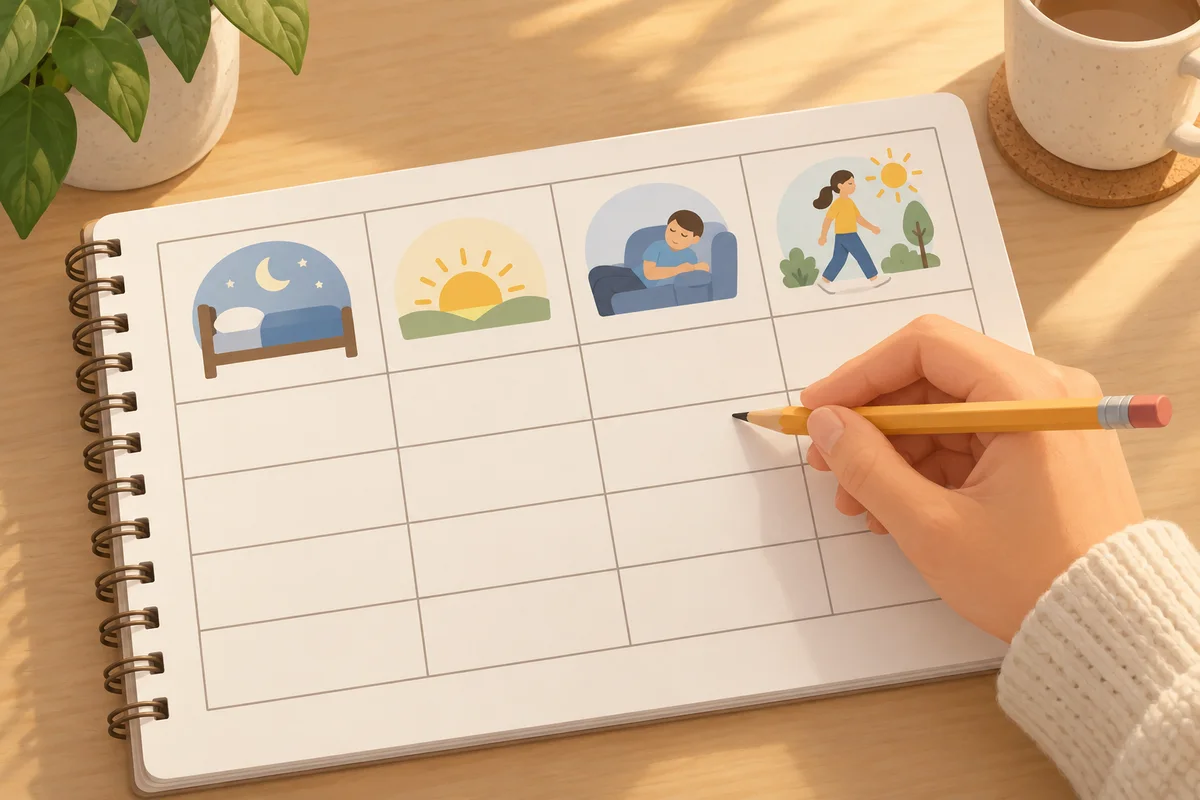
For a simple starting point, make one brief entry after getting up. Estimate rather than repeatedly checking the clock overnight. “Around eleven,” “awake more than once,” and “not sure” can communicate useful information. Your clinician can clarify whether more detail is needed.
Include the distinction between going to bed and trying to sleep. Someone may read in bed for an hour before switching off the light; another may spend that hour trying to sleep. A diary that merges those situations can hide the question you actually want help with.
| Field | What to record |
|---|---|
| Bed and attempted sleep | Approximate time you got into bed and began trying to sleep |
| Falling asleep | A rough sense of the delay, if known |
| Night waking | Approximate number or a short description; uncertainty is acceptable |
| Final waking and getting up | Approximate times, especially if they differ |
| Daytime effect | Sleepiness, concentration, mood, or a specific affected activity |
| Relevant context | Naps, caffeine, alcohol, exercise, illness, care interruptions, or schedule changes |
You do not need to calculate sleep efficiency, diagnose insomnia, or create a daily verdict. If your provider uses a calculation as part of treatment, ask them to explain its purpose and how it relates to your plan.
Give daytime impact as much space as the clock
“I slept badly” can describe very different days. One person is tired but manages routine tasks; another is struggling to stay awake during a commute. Write a concrete example that helps show the difference.
Useful descriptions include “needed to reread work instructions,” “cancelled a social plan because I felt exhausted,” or “felt sleepy while driving and stopped.” You do not need to assign a number unless the form asks for one. Keep feelings and observations distinguishable: “felt anxious about the meeting” is different from “missed the meeting.”
Also note better days. A record made only when you are distressed can miss variation. You might notice that sleep is different on days off, after a change in shift, or when another person shares nighttime care. These are discussion points, not proof that one factor caused the change.
If sleepiness affects safety, take appropriate action now. The NHS insomnia page advises against driving when sleepy. Do not wait for a complete diary to respond to a risk.
Add context without documenting your entire life
Context can include when you had caffeine or alcohol, naps, exercise, unusual stress, pain, illness, and changes in routine. Record medication information as requested, including over-the-counter products and supplements. The point is to inform a professional, not to decide independently that a prescribed treatment is responsible.
Keep the level of detail proportionate. “Late shift, home around midnight” may be enough. A minute-by-minute account of every screen interaction is unlikely to be necessary for an initial conversation. Likewise, you do not have to disclose the private content of a relationship conflict to show that the night was stressful.
For caregivers and shift workers, identify when you had an opportunity to sleep and what interrupted it. A diary should not portray a lack of safe sleep opportunity as a personal failure to follow habits. Note practical barriers: shared housing, noisy building work, pain with position changes, or an unpredictable care schedule.
A fictional entry and the question it raises
The following example is fictional and demonstrates communication only. It does not describe a patient or suggest a normal target.
Imagine an adult writes: “Tuesday: bed about 10:45, tried sleeping around 11:15 after reading. Took a while to fall asleep, uncertain how long. Woke twice; one longer stretch. Awake for the day around 6:30, up at 7. Nap in the afternoon. Evening coffee. Tired at work and reread several messages.”
The useful follow-up is not “coffee caused everything.” It might be: “What details would help us distinguish schedule, habits, stress, or a health problem?” If several entries mention breathing interruptions reported by a partner, that should be raised directly rather than hidden among diary totals.
Compare this with “Terrible night, score 42.” The score conveys distress but leaves many questions unanswered. Short descriptions can be easier to interpret, especially when an app’s method is unclear or the person feels that its estimate does not match their experience.
Use the record to prepare a conversation
Bring the form or a concise summary, along with your main question. For example: “I have been waking in the night and struggling during afternoon work. What should we assess?” Mention when the problem began, whether it is changing, and anything unusual such as loud snoring, waking gasping, significant pain, or major mood changes.
NIMH recommends preparing concerns and medication information before a health appointment. You can use our appointment-notes guide to keep the priority question visible. If anxiety is strongest on waking, morning anxiety gives language for that separate part of the day.
Ask what happens next: whether another assessment is needed, what treatment options fit, and how to judge whether an agreed change helps. Keep clinician-agreed actions separate from your observations so a note does not accidentally become a self-prescribed treatment plan.
If tracking becomes the problem
A diary can become unhelpful if you repeatedly revise estimates, check a wearable throughout the night, or cancel activities because a score predicts a bad day. Tell your provider about that response. Ask whether a shorter record, fewer fields, or an occasional summary would be suitable.
You can also make the record less visible: use paper in a drawer, enter it once, and leave it closed. The diary’s job is finished until the next entry or appointment. If it cannot serve that limited purpose, the approach may need adjustment. You deserve help with sleep even when detailed monitoring is a poor fit.
Frequently asked questions
How long should I keep a sleep diary?
Follow your clinician’s instructions when available. NHLBI describes a short record before assessment, often one to two weeks. Ask which period is useful for your schedule; do not delay care to complete a perfect record.
Do I need a wearable or sleep-tracking app?
No. A simple paper record can support an appointment. If you use a device, explain what it measures and how its estimates compare with your experience. A consumer score does not establish a diagnosis.
Should I check the time every time I wake?
Repeated clock checking is not required for a basic diary. Use a morning estimate and mark uncertainty. Ask your provider if their specific form needs a different approach.
What if the diary makes me worry more?
Tell the clinician and ask about simplifying it. Monitoring should support care, not become an obstacle to rest or a reason to judge each day before it begins. An incomplete record is acceptable.
Evidence base
Sources
Continue reading
What to write before a health appointment when your mind goes blank
Prepare a short health appointment note with your main concern, concrete examples and questions, then record the next steps before you leave.
· 7 min read
Morning Anxiety: Why Worry Can Feel Strongest After Waking
Anxiety can feel intense on waking because body rhythms, sleep, uncertainty, habits, and health factors meet before the day has begun.
· 4 min read
When the Clocks Change: A Practical Plan for Your Sleep
Clock changes can disrupt sleep and daily timing. Check local rules, plan ordinary routines, and protect safety without forcing a rigid schedule.
· 7 min read