
The Restaurant Was Fine—Until It Wasn’t
Sensory load can build quietly and become overwhelming all at once. Here is a kinder way to notice the whole environment and plan for what helps.
In brief
What to take away
- Sensory load can come from several ordinary inputs adding up, not one dramatic trigger.
- A useful adjustment is personal: less noise may help one person, while movement, predictability, or a quicker exit may matter more to another.
- Planning an easier way in and an easier way out is access, not failure.
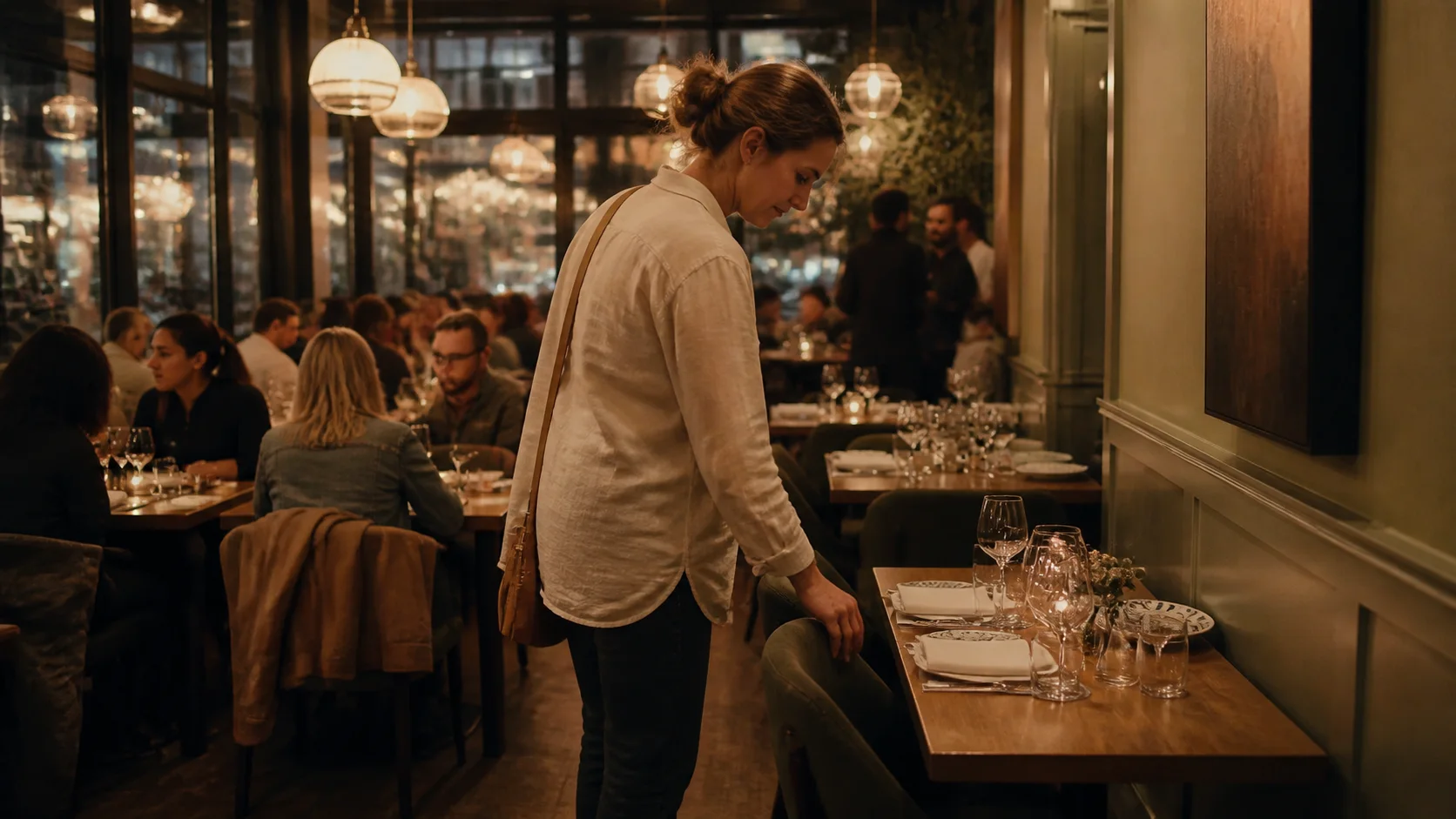
The first fifteen minutes are genuinely fine. The menu is clear, the conversation is easy, and the table by the window seemed like a good choice. Then the room fills. A coffee grinder starts behind the counter. Cutlery lands in a metal tray. Someone nearby is wearing a strong fragrance, and the low sun begins flashing in the glass door each time it opens.
Nothing on that list looks enormous by itself. Together, though, the details can begin to crowd out the conversation. Following a sentence takes more work. Choosing food becomes harder. The chair feels less comfortable than it did ten minutes ago. By the time leaving feels urgent, another person may only see a sudden change: the restaurant was fine, and then apparently it was not.
When “fine” changes quickly
A sensory environment is rarely just one sound or one light. It is the combined work of filtering voices, tracking movement, tolerating textures and smells, making decisions, and staying socially engaged. Hunger, fatigue, pain, uncertainty, and the effort of masking discomfort can all change how much capacity is available at that moment.
This is why the last input is not necessarily the whole explanation. A dropped spoon may be the moment other people notice, but it may arrive after twenty minutes of managing everything else. Treating that final sound as the only problem can lead to an unhelpful search for a single trigger when the more useful question is what the whole setting was asking from the person.
Sensory differences are personal, not a standard checklist
NHS information for adults notes that autistic people may be more sensitive or less sensitive to light, sound, smell, taste, or texture. NICE guidance similarly asks services to consider both heightened and reduced sensory sensitivity and to adapt environments around individual needs. Those two directions matter: one person may need less input, while another may seek firmer pressure, movement, or a stronger sensory cue to feel oriented.
Preferences can also change across settings and days. Music chosen at home is different from music competing with six conversations. A bright room may be workable after rest and much harder at the end of a demanding day. Noticing that variation does not make the need inconsistent or less real.
Notice the combination, not only the loudest detail
A brief sensory review works best as observation rather than a test. The aim is not to prove which sensation caused a reaction. It is to find patterns that make the next environment more workable. The table below can be adapted without using every row.
| Notice | Questions to ask | Possible adjustment to test |
|---|---|---|
| Sound | Is one sound difficult, or are several layers competing? | Choose a quieter time, sit away from speakers, or use preferred ear protection. |
| Light and movement | Is there glare, flicker, passing traffic, or constant movement in view? | Change seats, face a calmer direction, or use a hat or tinted lenses if they already help. |
| Smell, taste, and texture | Are strong smells or unfamiliar textures using up capacity? | Preview the menu, bring a familiar option where appropriate, or shorten the visit. |
| Predictability | Is uncertainty about timing, ordering, or leaving adding to the load? | Agree on the plan, transport, payment, and an uncomplicated exit before arriving. |
| Internal state | Are fatigue, hunger, pain, or earlier demands already present? | Lower the demands of the outing or choose another day without treating that choice as defeat. |
Plan before the room is full
A plan made while there is still capacity is easier to use than a complicated decision made at the most overloaded point. Useful details might include looking at photographs of the venue, checking whether booking is possible, choosing a seat with fewer people passing behind it, and agreeing that anyone can step outside without having to defend the decision.
The plan should reduce negotiation, not create a performance standard. Leaving early, changing tables, ordering something familiar, or deciding not to attend are all valid possibilities. The success of the outing is not measured by staying until everybody else is ready to go.
Recovery is part of access too
Sensory effort may continue to be felt after the room is left behind. Conversation might be difficult for a while. A person may want lower light, familiar clothing, less touch, repetitive movement, quiet, or time alone. Asking what helps is more respectful than assuming that one universally calming activity will work.
Recovery time is not evidence that the person handled the outing badly. It is part of the real cost of the activity. Including that cost in plans can make social life more sustainable and can prevent every invitation from becoming a choice between missing out and paying for it later.
When more support may help
Sensory differences can overlap with pain, hearing or vision changes, migraine, anxiety, medication effects, and other health concerns. New or significant changes deserve individual medical attention rather than being automatically attributed to autism. If sensory demands are repeatedly limiting eating, health care, work, study, relationships, or access to essential places, an autism-informed professional may help explore adjustments with the person.
Evidence base
Sources
Continue reading

Listening Does Not Always Look Like Eye Contact
Looking away can make it easier to process language, organise a response, or stay in a conversation. Attention deserves better evidence than a gaze test.
· 5 min read
What Neurodiversity Does—and Does Not—Mean
Neurodiversity can be a precise and useful idea, but only if it leaves room for disability, individual needs, clinical care, and people’s own language.
· 6 min read
Ask for an Accommodation Without Explaining Your Whole Life
A clear request can focus on the barrier, the change you need, and how it would help—without turning a private history into a persuasive performance.
· 6 min read