
Waking Up With Panic at Night: What to Do and What to Check
Waking with intense fear can be frightening. Learn immediate safety steps, what to note about recurring episodes, and why medical assessment can matter.
 AuthorVitaly Chopik
·7 min read
In brief
What to take away
- Intense fear on waking is a description of an experience, not proof of panic or a single sleep disorder.
- Prioritize urgent physical symptoms, then choose a safe and low-pressure way to orient to the room.
- Recurring episodes, breathing concerns, or fear that disrupts sleep deserve assessment.
Sudden fear can feel different when you wake into it
You wake with a pounding heart, a rush of fear, and the sense that something is wrong. There may be no remembered dream and no obvious event to explain it. The room is familiar, yet your body feels as though it needs immediate action. Waking up with panic at night can be especially frightening because the sensations arrive before you have had time to understand the situation.
Panic-like experiences can happen at night, but an article cannot tell whether a particular episode is panic. Nightmares, breathing-related sleep problems, physical illness, medicines and other factors may need consideration. The first task is safety, followed by a description of what happened.
The NHS guidance on anxiety and panic describes symptoms that can include a racing heartbeat, dizziness, trembling and feeling sick. Those symptoms can overlap with physical conditions. Recognizing a familiar list is not enough to rule other explanations out.
Decide whether medical help is needed now
Seek urgent medical help for severe or unfamiliar symptoms such as significant chest pain, severe difficulty breathing, fainting, new weakness or confusion, or anything covered by an existing emergency plan. If you are unsure about the urgency, use an appropriate local medical advice service rather than relying on an internet comparison.
A previous panic diagnosis does not remove the possibility of a different problem. Equally, being frightened does not make a physical symptom less deserving of attention. Tell the professional what is happening, what is new or different, and any relevant health conditions.
If another person is with you, give them one clear task: stay nearby, contact medical help if needed, or bring the information for your existing care plan. They do not have to work out the diagnosis in the bedroom.
Orient to the room with as little effort as possible
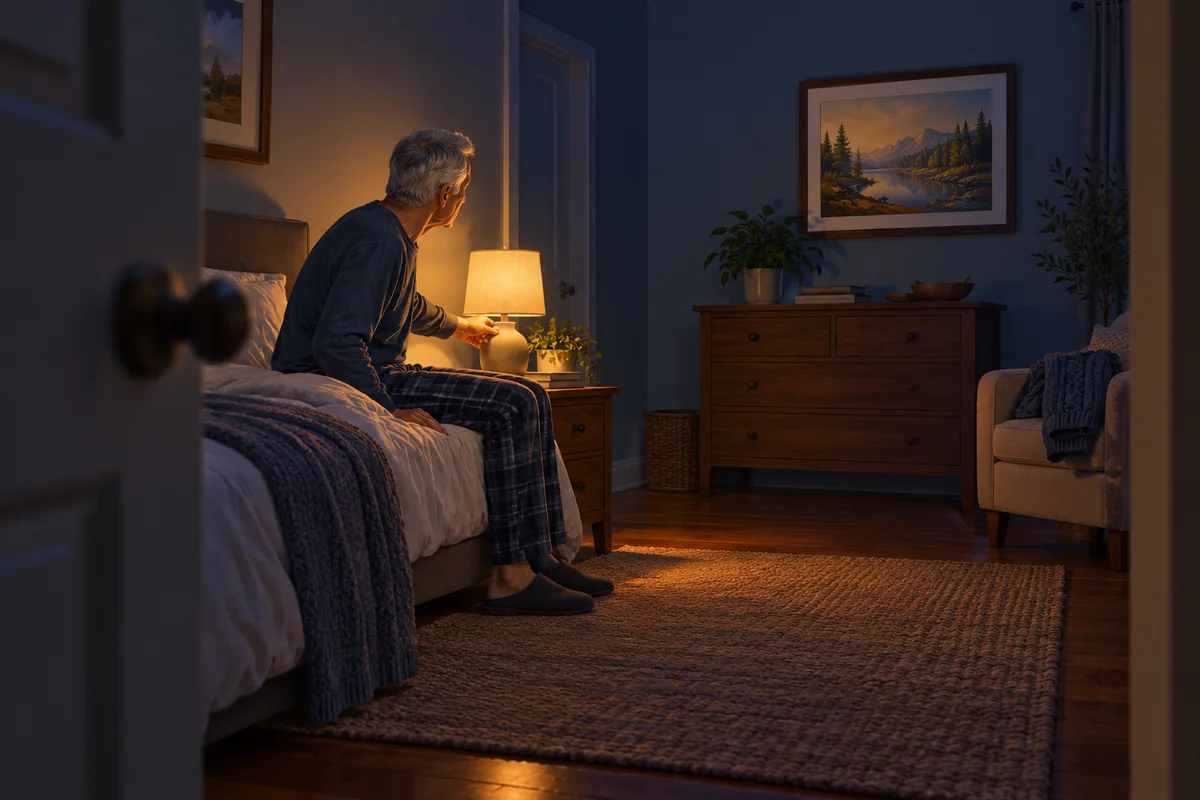
When immediate medical concerns have been considered and you are safe, make the next step ordinary. Turn on enough light to see comfortably, sit or change position if that feels safe, and notice where you are. A familiar object, the feel of the mattress or a quiet conversation can help provide context.
Keep movement appropriate to your balance, pain and mobility. If you feel faint or unsteady, do not rush to stand or walk around in darkness. You can ask for help without first attempting every suggested coping technique.
Let your breathing be gentle and comfortable rather than taking repeated forced breaths. Do not use a paper bag. If attending closely to breathing increases alarm, look at an external object or listen to a familiar voice instead.
You do not need to decide immediately whether to return to sleep. Once the acute distress has eased, a quiet, safe activity may feel less demanding than lying in bed trying to guarantee there will be no second episode. Follow any individualized sleep or medical plan you already have.
Record what happened when daylight makes it easier
A brief note the next day can be more useful than a long investigation during the night. Estimate what you can; uncertainty about timing is acceptable. The aim is to help a professional understand the episode and the wider sleep pattern.
| Detail | What you might describe |
|---|---|
| Waking | Whether you recall a dream, a noise, discomfort, or simply becoming aware of fear |
| Physical sensations | Breathing changes, heartbeat, pain, trembling, dizziness or nausea |
| Sleep observations | Snoring, gasping, unusual movements, or observations from a bed partner |
| Recent context | Stress, illness, sleep disruption, alcohol, caffeine, or treatment changes |
| Daytime effects | Sleepiness, concentration problems, cancelled activities, or fear of bedtime |
Do not change medicines or supplements to test a theory yourself. Bring the list to the clinician or pharmacist, including anything taken occasionally. If someone witnessed the episode, their account may help, with your agreement.
The NHS insomnia guide describes a range of possible sleep difficulties and contributors. Breathing interruptions and repeated waking deserve assessment rather than being assumed to be part of an anxious personality.
Nightmares and nighttime panic are not interchangeable
A remembered frightening dream may suggest a nightmare-related experience; waking into fear without recalling a dream may feel different. However, memory is imperfect and experiences can overlap. The presence or absence of a remembered dream is not a diagnostic test.
Also tell a clinician if there is confusion, unusual behaviour during sleep, injury, or a partner’s report that differs from what you remember. These details can help determine whether further sleep or medical evaluation is appropriate.
Our general panic guide explains panic symptoms and support more broadly. If you are recovering after an episode, what can happen after a panic attack discusses tiredness and the next part of the day. Neither article can confirm what caused your nighttime experience.
You do not have to choose the correct label before booking an appointment. “I have woken with intense fear several times, and I am now afraid to go to bed” is a clear reason to seek help.
Address the fear of the next night too
After an alarming episode, you may monitor every heartbeat in bed, keep checking the time, or stay awake deliberately to prevent another awakening. Those responses are understandable, but they can make rest harder and deserve attention alongside the original episode.
Try to keep preparation practical: know how to get help, keep a safe light within reach, and arrange any support you need. A repeatedly expanding set of checks may create more pressure than reassurance. Discuss that pattern rather than trying to solve it with a stricter nighttime ritual.
The NIMH guide to talking with a health professional recommends explaining symptoms and their impact. Mention both the nighttime event and what has changed afterward. A useful plan may address sleep, physical health and anxiety together.
Seek support sooner when episodes recur, sleep is substantially disrupted, or daytime safety is affected. You do not need to wait for a particular number of nights before asking for help.
Frequently asked questions
Can panic happen while I am asleep?
People can wake with intense panic-like symptoms. However, waking fear alone cannot confirm panic or exclude another sleep or medical problem. New, recurrent or concerning episodes should be discussed with a qualified professional.
Does not remembering a nightmare prove it was a panic attack?
No. Dream recall varies, and different nighttime experiences can overlap. Describe what you remember and any observations from another person without treating one detail as proof of a diagnosis.
Should I check my pulse until it returns to normal?
Repeated checking can add to alarm and does not identify the cause. Follow any monitoring advice you have been given for a health condition. Otherwise, seek appropriate medical guidance for concerning symptoms instead of using repeated checks as reassurance.
What if I am now afraid to sleep?
That change matters. Tell a clinician about the fear, any bedtime checking or deliberate sleep avoidance, and the effect on daytime functioning. Support can address the experience and the worry that follows it.
Evidence base
Sources
Continue reading

Panic Attacks: Symptoms, What to Do, and When to Get Help
A panic attack can make an ordinary moment feel suddenly dangerous. Learn what may be happening, how to respond safely, and what to do if episodes keep returning.
· 14 min read
After a Panic Attack: Why You Feel Tired and What Helps Next
After a panic attack, people may feel tired, shaky, sore, emotional, or watchful. A low-demand recovery plan can help while preserving medical safety.
· 5 min read
Paid a Scammer and Feel Overwhelmed? Organize the Next Contact
After a suspected scam, contact the payment provider promptly through a trusted route. Prepare a brief account and ask for support without handing over control.
· 8 min read