A Minds Vary guide Neurodiversity & Everyday Life
Adult Sleepwalking: A Household Safety Plan and When to Seek Care
Someone at home may be sleepwalking. Review hazards, agree on a calm response and prepare useful observations for a clinician without diagnosing the cause.
 Written byVitaly Chopik
8 min read
Educational information for everyday wellbeing. Clinical review is recommended; this guide has not been clinically reviewed. Our review standards
In this guide
- Describe the event before choosing a label
- Review the route through the home together
- Agree on a calm response to an episode
- Know when a clinical conversation matters
- Keep a brief record that separates facts from guesses
- Review the plan without making someone an overnight guard
- Common questions
- Sources & further reading
The starting point
A few things to keep in mind
Describe what was observed without assuming that every unusual nighttime event is sleepwalking; first episodes in adulthood, injury or daytime effects deserve clinical discussion.
Review trip and sharp-object hazards with the adult while awake, preserving emergency exits and avoiding restraint or confinement.
Agree on a calm response, keep brief factual observations and ask a clinician about assessment rather than changing medicines or inventing a treatment routine.
Someone gets out of bed, walks through the hall and does not seem fully aware of a conversation. In the morning, they remember little or nothing. It can be unsettling for both the person and anyone who saw it. A useful first response has two parts: reduce the immediate hazards and describe the event accurately enough to ask for advice.
This guide concerns adults and possible sleepwalking at home. It cannot identify the cause of an unusual nighttime event. You can take a safety concern seriously without deciding that it proves stress, a mental-health condition or a particular sleep disorder.
Describe the event before choosing a label
The NHS describes sleepwalking as movement during partial waking from deep sleep, often earlier in the night. The person may have open eyes, respond unusually and remember little afterward. These features provide context; they are not a home diagnostic test.
Write down what someone actually noticed: “You stood in the hallway and did not answer normally” is different from “You were having a nightmare.” If nobody witnessed the event, say that. Waking somewhere unexpected is an observation, but it does not reveal everything that happened in between.
Our guide to stress and nightmares focuses on waking from a distressing dream. This page addresses hazards and responses when an adult appears to move while not fully awake. A clinician may need to distinguish several kinds of nighttime events rather than rely on either description alone.
Review the route through the home together
Have the conversation during the day, with the adult involved in decisions. Start from the route or hazard that was actually observed. Avoid turning the whole home into a surveillance project or treating the person as a problem to contain.
NHS guidance includes clearing trip hazards, securing sharp objects and considering a door alarm where leaving home is a risk. Adapt any change to the adult’s mobility, household and emergency needs. A device that alerts someone is different from a barrier that prevents escape. Do not restrain someone, lock them in a room or obstruct a fire exit.
Use a short household review:
- Check the observed walking route for loose cables, shoes and other objects that could cause a fall.
- Put knives, tools and fragile items in appropriate secure storage rather than leaving them along that route.
- Identify stairs, windows or an outside doorway that raise a specific concern and ask for individualized advice about a safe arrangement.
- Check that any proposed change preserves access to emergency exits, necessary care and essential mobility equipment.
- Agree who will make each feasible change and what still needs professional advice.
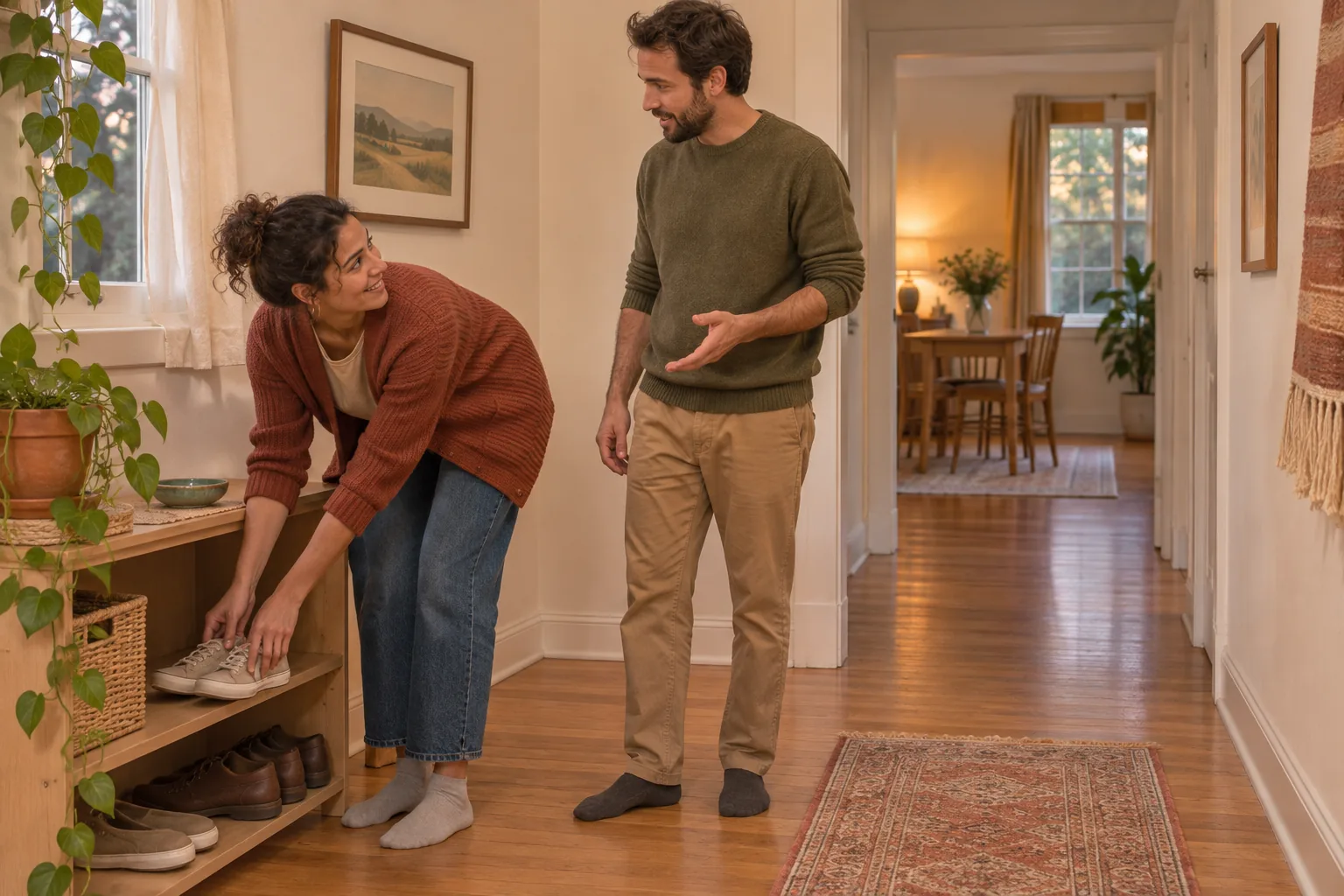
For example, moving shoes from the hallway may be a practical first change. A complicated locking system is a different decision with different risks. Do not assume that advice about gates for young children is suitable for an adult. If the observed behavior involves leaving home, driving or another serious hazard, seek prompt professional guidance rather than relying on a generic checklist.
[!CALLOUT:note] A safer setup still needs a way out Consider the whole household’s emergency access. This article does not recommend confinement, physical restraint or a particular lock, gate or alarm product. Ask for suitable advice when injury risk, mobility or building safety makes a change uncertain.
Agree on a calm response to an episode
The NHS advises gently guiding a person back to bed. If waking is necessary, do it gently; sudden waking can leave the person confused or upset. You do not need to frighten them awake to prove that the event is over.
While everyone is awake, discuss what a helper could say and what would feel respectful afterward. A simple phrase such as “Let’s go back this way” may be easier to remember than a long explanation. This is an example of wording, not a technique guaranteed to work for every person or episode.
Do not turn guidance into a physical struggle. If approaching is unsafe, keep yourself and others out of danger and seek appropriate help. Serious injury, severe breathing difficulty or immediate danger needs local emergency assistance; an online description of sleepwalking should not delay that response.
The following morning, share the facts privately. Avoid jokes, blame or posting a recording for others to interpret. Someone who does not remember an event may need a clear account, but they do not need an audience. Ask how they want to be involved in the next conversation about safety and care.
Know when a clinical conversation matters
Mayo Clinic identifies reasons to seek assessment including first onset in adulthood, frequent episodes, dangerous behavior, injury, disrupted sleep and problems with daytime functioning. You do not need to wait for an accident before raising a credible safety concern.
Mention breathing pauses, major daytime sleepiness and other changes you have noticed. These do not establish a cause. If sleepiness makes driving or operating equipment unsafe, stop that activity and arrange a safer alternative while seeking advice.
You might begin: “An adult in our home has started walking at night without remembering it. We are worried about the stairs. What assessment and immediate safety advice would you recommend?” That communicates the event, the concern and the decision you need help with, without requesting a particular diagnosis.
If you are the person experiencing it, you can say, “This is what I remember, and this is what someone else observed.” Ask whether a willing observer could contribute information through the service’s appropriate process. Their observations can supplement your account without replacing your voice.
Keep a brief record that separates facts from guesses
For a later conversation, note the approximate date and timing, what happened, whether anyone was hurt and how sleep or the next day was affected. “I am not sure how long it lasted” is useful honest information. You do not need continuous overnight monitoring or exact minute-by-minute data to make an initial inquiry.
Mayo Clinic’s assessment guidance describes reviewing medical and sleep history, possible information from a sleep partner and, in some cases, an overnight sleep study. Ask what is needed in your circumstances. A study is a possible assessment step, not something every household must arrange independently.
If a study is recommended, our sleep-study questions guide explains how to ask about the actual appointment. You do not need to start wearing a consumer device or buy a camera to prepare for that discussion.
Keep relevant medicine and supplement information available for the clinician, including recent changes. Do not stop, change the dose or add a sleep product based on a suspected connection. Agree with the service what information to collect next rather than delaying care until a self-imposed diary is complete.
Review the plan without making someone an overnight guard
A household plan needs to be feasible for everyone who lives there. Discuss what has actually been changed, which concern is unresolved and who to contact if the pattern changes. Do not quietly assign a partner the job of staying awake all night.
If you live alone, explain that you may not have a witness. Share the observations available to you and the specific concern; missing observations are a limitation for assessment, not a reason to dismiss the request. Ask the clinician what next step would be useful and proportionate.
Safety changes and assessment can proceed together. A clear hallway does not establish that the underlying issue has resolved, and a referral does not remove tonight’s hazards. Revisit both the practical arrangement and the clinical advice without expecting the household to diagnose or treat the problem itself.
Common questions
Is it dangerous to wake someone who is sleepwalking?
Gentle guidance back to bed may be enough. If you need to wake them, do it gently because sudden waking can cause confusion or distress. Avoid confrontation and get help if the situation is unsafe.
Does new sleepwalking in an adult mean it is caused by stress?
No cause can be established from that description alone. New onset in adulthood deserves clinical discussion, especially with injury risk, disrupted sleep or daytime effects. Describe the context without assuming the explanation.
Must we record an episode before asking for care?
No. Start with the observations you have and say what is uncertain. Ask the service what further information would be useful, respecting the person’s privacy and avoiding surveillance or delayed assessment.
Behind this guide
Sources & further reading
Written by Vitaly ChopikMinds Vary · Editorial standards