
A Minds Vary guide Anxiety & OCD
How to Breathe When You Feel Stressed
Try a gentle breathing exercise for everyday stress, adapt the pace to your comfort, and learn when breathlessness needs medical attention.
 Written byVitaly Chopik
6 min read
Educational information for everyday wellbeing. Clinical review is recommended; this guide has not been clinically reviewed. Our review standards
In this guide
The starting point
A few things to keep in mind
Keep the breath gentle and comfortable; a bigger breath is not always a better breath.
Counting is optional, and you can stop if focusing on breathing makes you uncomfortable.
New or severe breathing problems need medical assessment, even during a stressful moment.
You do not need a complicated breathing pattern to begin. If this is a familiar moment of everyday stress and you are otherwise breathing comfortably, try letting the breath become a little gentler. Sit somewhere supported, release any pressure to get it right, and let your next breath arrive without pulling in a huge lungful of air.
This guide offers an optional exercise, not a test of how calm you can become. You can keep your eyes open, leave the counting out, and return to ordinary breathing whenever you want. A technique that suits someone else may be uncomfortable for you; that is useful information, not failure.
First, check whether an exercise is appropriate
Stress can change how breathing feels. But being stressed does not establish the cause of shortness of breath. Do not use a breathing exercise to decide whether a new symptom is safe. Severe breathing difficulty, a tight or heavy chest, fainting, or difficulty speaking needs urgent medical attention. Follow your local emergency guidance rather than working through this article.
If breathlessness is new, keeps returning, or happens with ordinary activities, arrange medical advice. If you have a heart or lung condition, use the action plan your clinician has given you. The NHS guidance on shortness of breath explains when to get help. An internet exercise should never replace prescribed treatment or delay an assessment.
For a familiar stressful moment without those warning signs, start by asking a smaller question: would a brief, comfortable pause be useful right now? You do not have to make a promise about how you will feel afterwards.
Make room for an ordinary breath
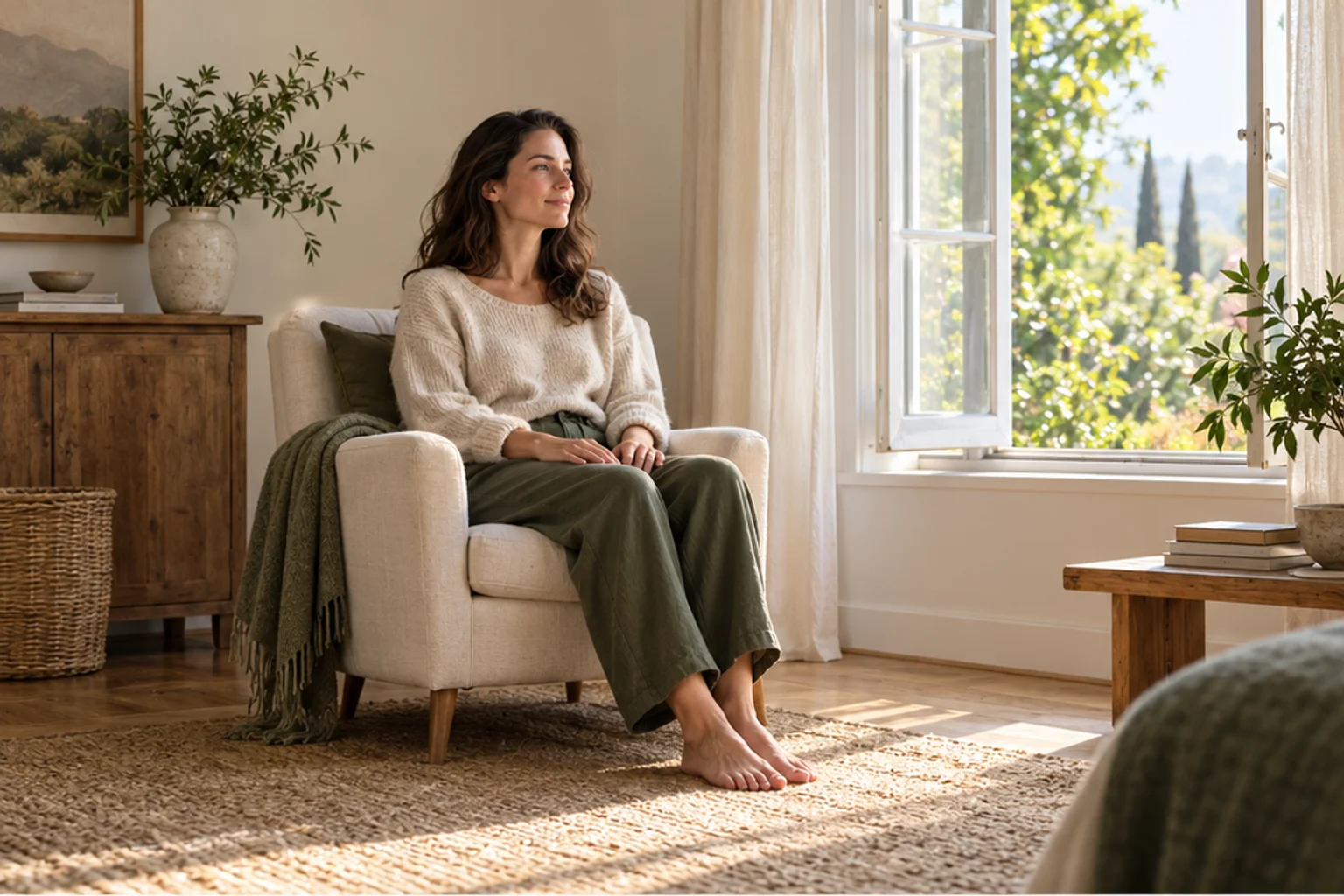
Choose a position that does not require effort to maintain. A chair with back support may be easier than sitting upright on the floor. Put your feet somewhere stable and let your hands rest. Loosen a tight waistband or collar if you want to and can do so comfortably.
There is no need to close your eyes, sit perfectly straight, or find complete silence. You might face a window, look at a plain wall, or stay aware of the room. If you are in public, a subtle pause can be enough; you do not need to perform an obvious relaxation routine.
[!CALLOUT:note] Comfort before precision The useful pace is one you can maintain without straining. Counting, posture and timing are optional supports, not targets to meet.
Before changing anything, notice one ordinary breath. You are gathering information, not inspecting every sensation. If noticing your breathing already feels unpleasant, skip to the alternatives below.
Try a gentle in-and-out rhythm
The NHS breathing exercise describes a comfortable rhythm without forcing the breath. Here is a practical way to approach it:
- Rest in your supported position and release any effort to take an unusually deep breath.
- Breathe in gently through your nose if that is comfortable. If it is blocked or uncomfortable, do not force it.
- Let the air leave gently. Keep your jaw and shoulders as easy as you can.
- If counting helps, count at an easy pace during the inhale and again during the exhale. Use a shorter count if a longer one creates strain.
- Continue only while it feels comfortable. You can stop, return to ordinary breathing, or try again another time.
You do not need to add a breath hold. Avoid turning the exercise into a contest about the longest exhale or the slowest possible breathing rate. The NHS suggests practising for several minutes, but an instruction on a screen is not a reason to keep going through discomfort.
If counting becomes another source of pressure
You may notice yourself monitoring each second or trying to work out whether the exercise is already helping. When that happens, simplify it. Let the numbers go and use a quiet phrase such as “easy in, easy out”, or leave words out altogether.
Do not repeatedly rate your anxiety after every breath. Instead, decide on a small next action before you begin: put the phone down, ask for a short break, or sit with a glass of water. The exercise then sits inside an ordinary pause rather than becoming a demand to produce a particular feeling.
If you become dizzy, uncomfortable, or more breathless, stop the pattern and let your breathing return to normal. Do not respond by trying harder or taking repeated huge breaths. Seek medical advice if symptoms persist or concern you.
When focusing on breathing is not helpful
Some people dislike attention on internal sensations. You can choose an external point of attention instead, without calling it a breathing exercise. Look at a stationary object, notice where the chair supports you, or listen to the sounds already in the room.
Other practical choices include:
- Taking a brief break from the stressful task, where that is possible.
- Asking someone to repeat an instruction or write down the next step.
- Reducing an immediate source of strain, such as a loud television or an uncomfortable seat.
- Contacting someone who can help with the problem behind the stress.
These are options to try, not proven substitutes for treatment. If mornings are especially difficult, our article on morning anxiety may help you describe the wider pattern.
Build a broader plan for recurring stress
Breathing cannot solve an unsafe situation, an unmanageable workload, or an anxiety disorder by itself. Once the immediate moment passes, consider what needs a practical response. A useful note might be: “The rush before the meeting is difficult; I need the agenda earlier.” That creates a next step beyond repeating an exercise.
The NIMH stress fact sheet encourages noticing triggers and finding support when symptoms persist or interfere with daily life. If worry is present much of the day, see anxiety all day and consider discussing the pattern with a qualified professional.
Common questions
Do I have to breathe into my belly?
You do not need to push your abdomen out or force a certain movement. Aim for comfortable breathing. If you have been given specific breathing advice for a medical condition, follow that individual guidance.
Should I use box breathing or a long breath hold?
This exercise does not require either. A simple rhythm may be easier to adapt. If holding your breath creates strain or anxiety, leave that part out rather than treating it as essential.
What if I do not feel calmer?
You can stop without deciding that you did it incorrectly. Consider whether another kind of support would be more useful. Repeated distress deserves attention to its causes and its impact, not endless attempts to perfect a breathing technique.
Behind this guide
Sources & further reading
Written by Vitaly ChopikMinds Vary · Editorial standards