
An ADHD Evening Routine That Makes Tomorrow Easier
Create an ADHD evening routine that reduces tomorrow's decisions, protects sleep, and includes a short version for nights when your plans change.
 AuthorVitaly Chopik
·7 min read

In brief
What to take away
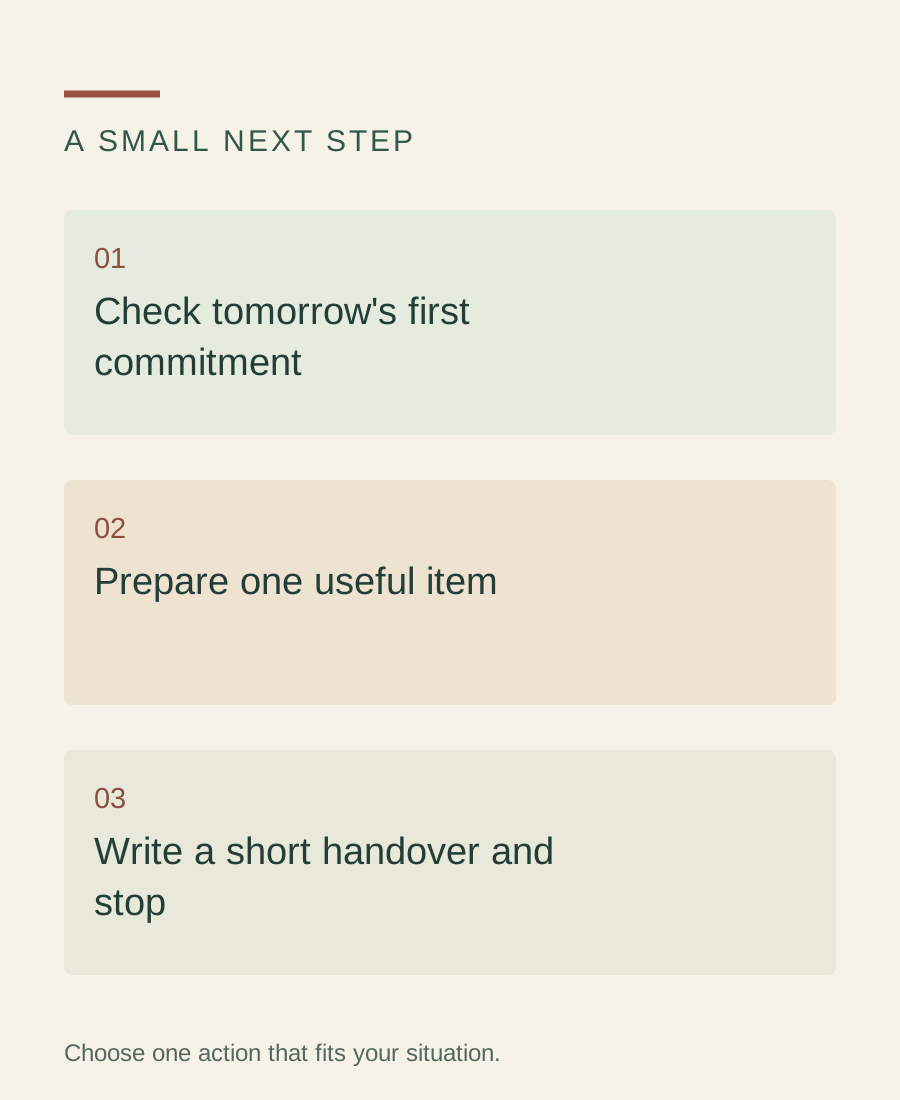
- Check tomorrow's first commitment.
- Prepare one useful item.
- Write a short handover and stop.
Make tomorrow easier without giving the whole evening away
An ADHD evening routine can be a brief handover to tomorrow: check the first commitment, prepare one useful thing, and make space for sleep. It does not need to include a spotless kitchen, an empty inbox, exercise, journaling, and a complete life review.
Choose a regular cue near the end of your active day. That might be finishing dinner, returning from a shift, or beginning your usual bedtime preparation. Keep the sequence short enough to use when the evening has already changed.
The goal is fewer decisions tomorrow and a clearer ending today. These are practical suggestions, not a treatment for ADHD or a sleep disorder. Persistent sleep difficulties deserve assessment rather than an ever more elaborate routine.
Separate preparation from catching up
Evenings can become the place where every unfinished task lands. Once you start answering messages or reorganizing a drawer, the preparation routine may disappear into a much larger project. Define what the routine is allowed to open.
A useful boundary is one calendar check, one preparation action, and a closing note. If you notice other unfinished work, capture it without beginning it automatically. A list can hold tomorrow’s decision; you do not have to solve it before resting.
If task transitions are difficult, our adult ADHD task-switching guide explains how a visible stopping point and restart note can reduce reconstruction later.
Use three small steps
- Look at the first commitment. Check its time, location, and any required item. Confirm unusual details rather than reviewing every future obligation.
- Prepare one thing. Put the document with the bag, choose clothing, arrange an easy breakfast option, or open the work file you will need.
- Close the open loop. Write what remains and where to begin. Put the note in the place you will actually see it.
Choose the preparation action according to tomorrow, not a fixed checklist that keeps expanding. An early appointment needs different preparation from a day at home. If several people share the morning, agree who is preparing which item.
Do not put medication or hazardous items where children, pets, or other people can access them. Follow storage and prescribing instructions. Visual reminders can be separate from the medicine itself.
Give the routine three acceptable versions
| Evening | Calendar check | Preparation | Closing action |
|---|---|---|---|
| Ordinary | First commitment and one change | Prepare the most useful item | Write tomorrow’s first action |
| Late or disrupted | First essential time | Put essential belongings in their usual place | Set a visible cue |
| More capacity | Review the next day’s main demands | Prepare food, clothing, or paperwork as useful | Capture remaining tasks without starting them |
If the shortest version is the one you use most often, make it the default. You can add an optional task when it helps, but the routine should not require an unusually calm evening to exist.
Protect sleep from the preparation project
Choose an ending that leaves time for your usual sleep preparation. Avoid treating sleep as spare time available for completing the list. A routine that repeatedly pushes bedtime later is creating a different problem.
Consider which activities keep you engaged beyond the intended stopping point: work messages, shopping, games, videos, household projects, or planning itself. You may need a separate cue for leaving those activities, such as saving the current state and writing a return note.
Phones can provide alarms, accessibility tools, and contact with others, so blanket advice to remove them may not fit. Decide which functions you need and reduce the ones that keep pulling you back. If sleep remains difficult, see ADHD and sleep in adults and discuss persistent patterns with a clinician.
A worked example after a late arrival
Suppose you arrive home later than planned and have an appointment in the morning. You notice dishes, unanswered messages, and laundry. The handover begins with the appointment: check the time and location, put the letter with your bag, and identify the first departure action.
You leave the nonurgent messages for a chosen time. You select clothing from what is available rather than beginning a full laundry cycle. If food or another household issue needs immediate safe handling, do that; the distinction is between actual need and the urge to repair the whole day.
The routine ends with a short note: “Check calendar; wash; breakfast; bag by door.” It is useful because it makes the next morning more legible, even though the evening remains imperfect.
Troubleshoot without adding more rules
If you forget the routine entirely, connect it to a cue you already notice or put the card where the final transition happens. If it turns into a long planning session, limit the calendar review to the first commitment and capture everything else separately.
If preparing belongings does not help because they move again, choose a consistent landing place. Our keys guide focuses on the route between arriving home and leaving. If the routine becomes a household reminder system owned by one person, redistribute preparation responsibilities explicitly.
Review after several real evenings. Ask whether tomorrow’s essential items were easier to find and whether the routine respected rest. A successful routine should reduce maintenance, not require constant monitoring to keep itself alive.
Download the action sheet
Frequently asked questions
What time should an ADHD evening routine start?
Choose a cue that fits your sleep needs, work, and household. There is no universal start time. It should leave enough room for sleep preparation and should not depend on finishing every other task first.
Should I clean before bed?
Handle immediate safety and food needs, then choose whether a small reset would help tomorrow. You do not need a complete household clean as a condition for resting. Keep the boundary specific so a short preparation step does not become an open-ended project.
What if I work nights or rotating shifts?
Treat the routine as the end of your active period rather than a particular evening hour. The same handover questions can apply: what is the next commitment, what needs preparing, and what will help you stop? Persistent sleep or shift-related problems may need individualized advice.
Can I skip the routine on a difficult night?
Yes. Use the smallest useful action if possible, or return to it next time. A missed night does not require restarting a streak. Notice whether the routine needs fewer steps or a different cue rather than adding a penalty for missing it.
Evidence base
Sources
Continue reading

Why Am I Always Late Even When I Start Early?
You checked the clock, began getting ready, and still arrived late. Understanding where time disappears can lead to kinder, more reliable ways of planning.
· 7 min read
ADHD and Sleep: Why You Can Feel Tired but Wired
ADHD and sleep can affect each other through late transitions, stimulation, unfinished tasks, irregular timing, and the cognitive cost of insufficient rest.
· 7 min read
Keep losing your keys? Build a landing place that fits your actual route
Build a practical place for keys around the route you take when arriving home, with simple cues for changing bags and recovering from missed steps.
· 6 min read