
Keep losing your keys? Build a landing place that fits your actual route
Build a practical place for keys around the route you take when arriving home, with simple cues for changing bags and recovering from missed steps.

In brief
What to take away
- Build a practical place for keys around the route you take when arriving home, with simple cues for changing bags and recovering from missed steps.
- If you have ADHD, or simply struggle with this repeated task, start by watching the route your keys already take.
- If forgetfulness is new, worsening or affecting many important parts of life, seek appropriate professional advice.
You are ready to leave, but your keys are not where you expected. You search yesterday’s jacket, the kitchen counter and the bag you almost used. A familiar suggestion appears: always put them in the same place. The missing detail is how to choose a place that survives an ordinary distracted arrival home.
If you have ADHD, or simply struggle with this repeated task, start by watching the route your keys already take. A useful landing place belongs on that route. It should be easy to reach, easy to recognize and simple enough to use while carrying other things.
Observe one arrival before changing anything
Think through what happened the last time you came home. Did you put down a shopping bag before removing your coat? Did a pet, child or phone call redirect you? Did the keys stay in the lock until you returned for them?
This is a practical description, not an investigation into personal failure. The same route may repeat often enough to suggest a good location. If you usually enter through the kitchen, a decorative bowl beside an unused front door is unlikely to help.
Choose a secure indoor location that does not make keys visible or accessible from outside. Convenience and household security both matter. Keep small objects and key accessories away from children who might swallow them.
Reduce the movements needed to put them down
A hook can work if it is easy to reach and the key ring fits. A tray can work if it remains a tray for essentials, rather than becoming a pile of unopened mail. A small compartment inside the bag you use daily may work better than either.
Try the movement with your hands full. If it requires opening a cupboard, moving several items and finding a small slot, it may be too demanding for the moment you want it to serve. You can adjust the environment without buying a specialized product.
Use a visible label if several people share the space. Explain whether it is a shared tray or a place reserved for one person’s keys. A system becomes unreliable if another person tidies the contents into an unknown drawer.
Connect the action to an event you already do
Pick an arrival event that happens most days: closing the door, putting your bag down or taking off your shoes. Attach one action to it: put the keys in their place. Keep the sequence short enough to describe in a sentence.
Rehearse it once when you are not rushing. You are checking whether the location is practical, not trying to establish a perfect habit through force. If you discover that the tray blocks the place where groceries land, move it.
For a week, leave an unobtrusive cue at the decision point. If the cue becomes background noise, consider whether the physical location needs changing before adding more reminders.
Make the system work across different bags and coats
Changing bags creates an extra handoff. Put the transfer on a short list with any other essentials you genuinely need. Avoid a twenty-item departure checklist if keys and wallet are the only recurring problem.
If you use multiple entrances, choose one home location or a clear rule for each. The rule should not require remembering where you were thinking about going tomorrow. It should describe something observable, such as the bag currently hanging on a particular hook.
| Situation | A small adjustment to test |
|---|---|
| Keys stay in coat pockets | Empty that pocket when the coat comes off |
| Several people move the tray | Agree on one reserved space |
| A new bag means forgotten essentials | Use a short transfer card |
| The landing place fills with mail | Give mail a different container |
Prepare a calm search sequence
Even a useful system will have misses. Decide on a brief search route while you are not late: landing place, current bag, last coat, last surface used. Search each place deliberately rather than repeatedly circling the same room.
If another person helps, tell them which places you already checked. Avoid turning the search into a discussion of every previous delay. The immediate task is finding the keys; reviewing the system can happen later.
A locating device may be useful for some people, but it also needs setup, power and a way to trigger it. Check whether you would maintain it before spending money. It supplements a landing place rather than creating one.
Review effort rather than perfection
After several days, ask whether searches are shorter or less frequent. If nothing changed, identify the exact handoff that failed. Perhaps the location is good but another person moves the keys, or the tray is reachable but too visually cluttered.
Losing keys alone does not diagnose ADHD. If forgetfulness is new, worsening or affecting many important parts of life, seek appropriate professional advice. For an established everyday difficulty, a modest environmental change is still worth testing on its own terms.
Further reading
Evidence base
Sources
Continue reading
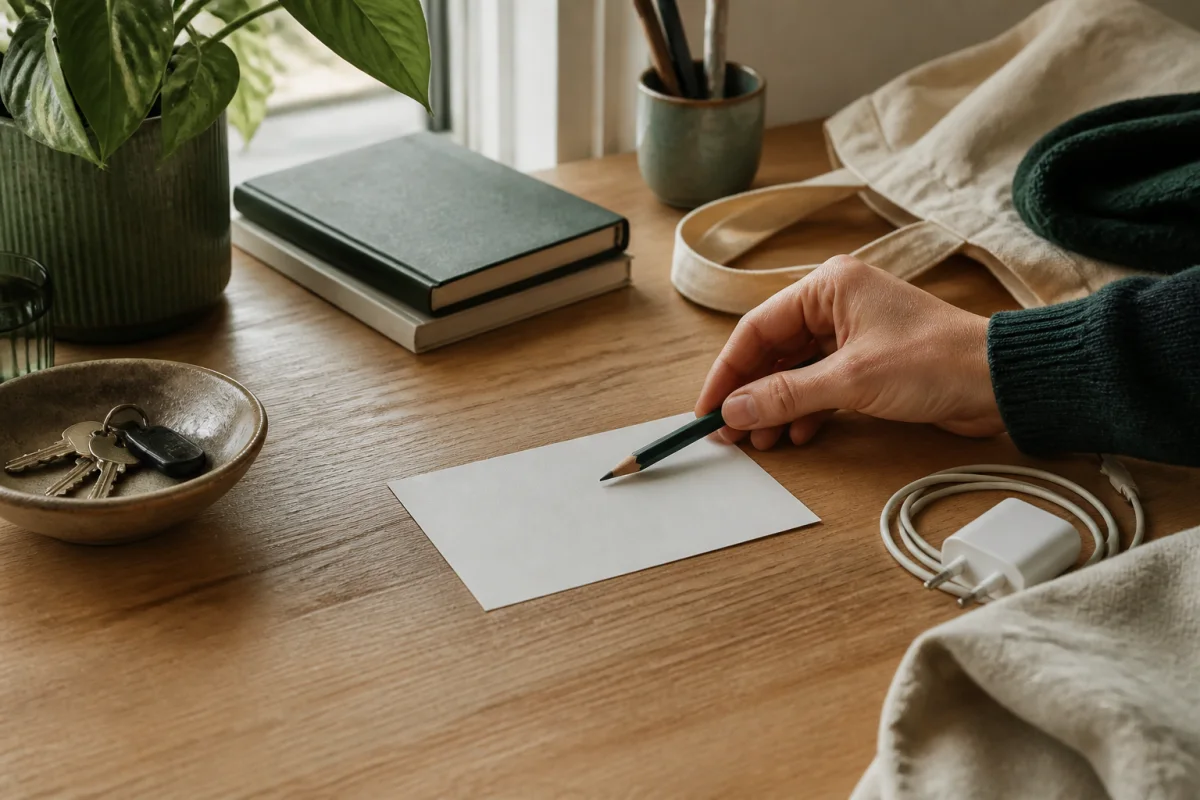
An ADHD packing checklist for a short trip, without starting from scratch
Pack for a short trip with separate lists for essentials, clothing and items still in use. Leave a clear final check without rebuilding the list each time.
· 5 min read
ADHD email overwhelm: a reply workflow for messages you keep reopening
Keep track of emails you repeatedly reopen. Separate replies, missing information and follow-ups with a small workflow you can resume after interruptions.
· 5 min read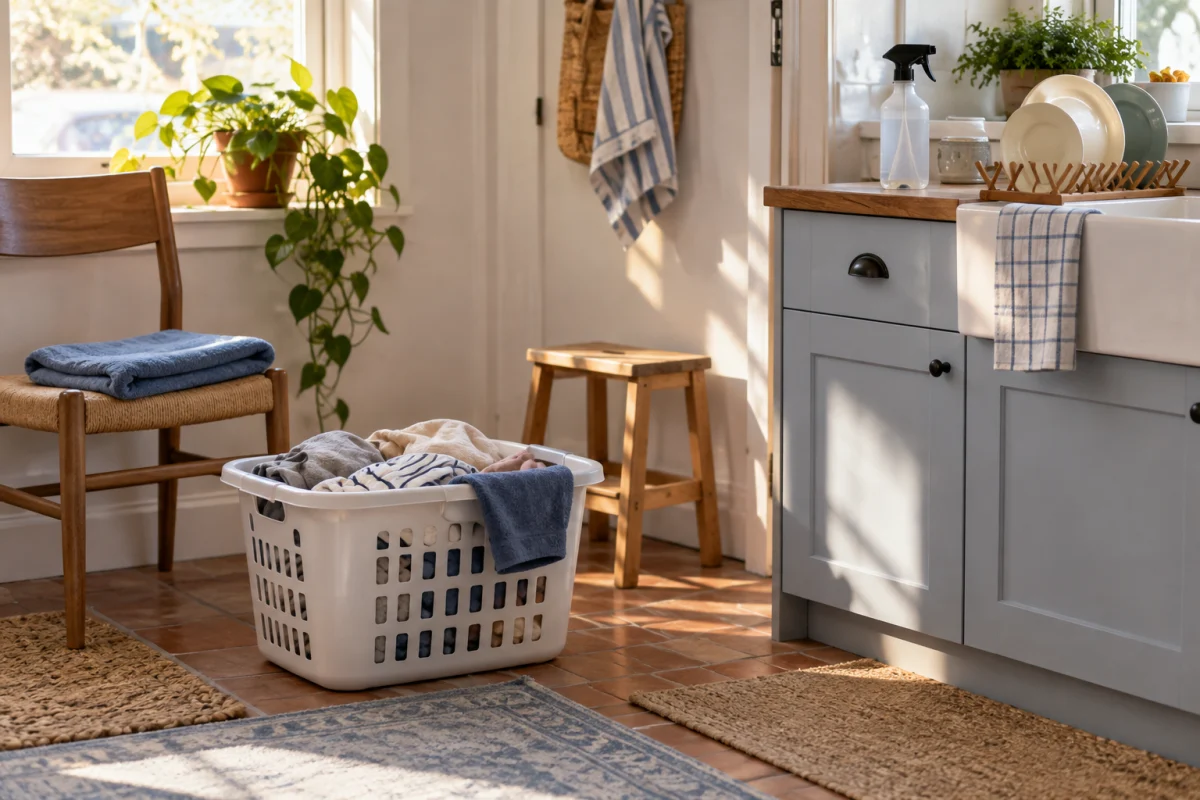
An ADHD laundry system for clothes that never get put away
A simple ADHD laundry system for clean clothes that stay in baskets. Plan washing, drying and storage around the step that actually stalls.
· 5 min read