
ADHD Morning Routine: Three Anchors for Unpredictable Mornings
Build an ADHD morning routine around three flexible anchors, with examples for early shifts, home working, caregiving, and low-energy mornings.
 AuthorVitaly Chopik
·7 min read

In brief
What to take away
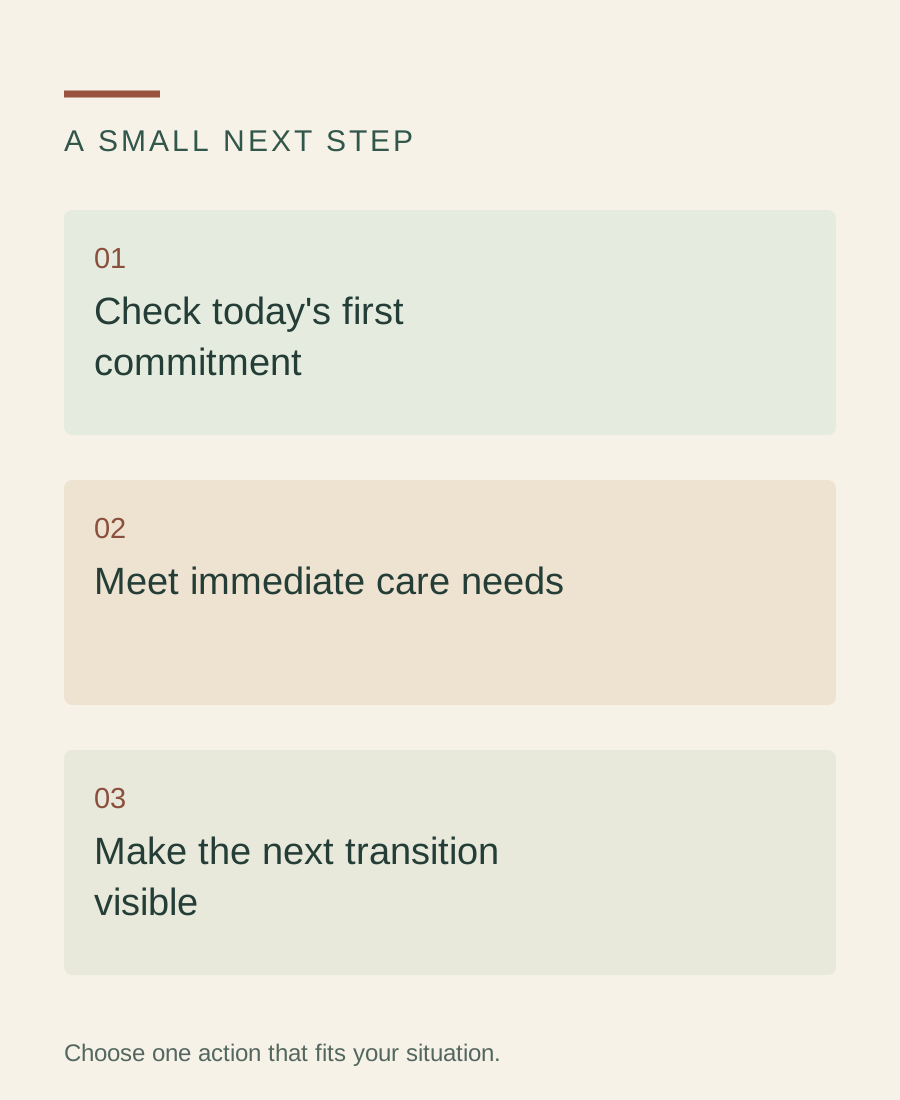
- Check today's first commitment.
- Meet immediate care needs.
- Make the next transition visible.
Build a sequence around three anchors
An ADHD morning routine can be easier to use when it has a few stable anchors and several acceptable versions. Try three: orient to the day, meet your immediate care needs, and move into the first commitment. Attach a small number of actions to each anchor rather than building a minute-by-minute ideal morning.
An anchor is a cue you can notice, such as getting out of bed, finishing breakfast, or putting on shoes. The cue can stay familiar even when your waking time changes. A clock-based schedule may still help; the aim is to choose cues that fit your life.
The routine below is an organizational experiment, not ADHD treatment. Sleep difficulties, shift work, disability, caregiving, and medication effects may require additional support. A morning routine should not depend on cutting sleep to create more preparation time.
Anchor one: find out what today needs
Choose one place to check the day: a calendar, a visible note, or an accessible planner. Look for the first time-bound commitment, anything you must bring, and a change from the usual pattern. You do not need to review the entire week before getting dressed.
Write the next transition in a concrete form: “At the desk for the call” or “leave with the appointment letter.” If departure timing is the main challenge, use our ADHD time-blindness guide, which covers working backward from arrival.
Make urgent information visible without covering the home in reminders. One card beside a familiar object may be more noticeable than several competing phone alerts.
Anchor two: meet immediate care needs
Choose actions that support your actual morning: toileting, washing, dressing, eating or arranging food, drinking, and prescribed care. The sequence will vary with disability, appetite, culture, work, and household responsibilities.
If medication is part of your care, follow the prescribed instructions. Ask a pharmacist or prescriber about timing, food, missed doses, and storage rather than changing the plan to fit a routine found online. Do not use a checklist as a reason to take an extra dose when uncertain.
Reduce avoidable choices. Set out an outfit if that helps; keep easy food options available; store everyday supplies where you use them. Choosing from two acceptable breakfasts may be easier than deciding from the whole kitchen.
This is also a place to notice needs that a routine cannot solve. Persistently unrefreshing sleep, severe morning fatigue, major appetite changes, or difficulty carrying out basic care deserve attention beyond planner design.
Anchor three: enter the first commitment
Separate getting ready from beginning work or leaving home. A final transition card can contain just the items that are easy to miss: essential belongings, the first destination, and the next action on arrival.
| Situation | Orient | Care | Enter the first commitment |
|---|---|---|---|
| Early shift | Check start time and transport | Use the prepared essentials | Pick up the work bag and leave |
| Working at home | Check the first meeting | Dress and arrange breakfast | Open the document needed first |
| Caregiving morning | Identify shared time constraints | Cover essential care for each person | Follow the agreed handover or departure |
| Low-capacity morning | Choose the one necessary commitment | Use the smallest workable care sequence | Ask for help or renegotiate what cannot fit |
For belongings that disappear during departure, use a landing place that fits your route. Our keys guide explains why the storage location matters more than repeatedly telling yourself to remember.
Give the routine a short version
Write the short version before you need it. For example: check the first appointment, complete essential personal care, bring the necessary items. Optional exercise, journaling, elaborate breakfast, or housework can move to another time if you want them.
The short version should still respect safety. Do not rush driving, omit prescribed safety steps, or leave a dependent without necessary care to preserve the appearance of being on time. Contact the relevant person if plans need to change.
Avoid making the routine so ambitious that the shortened version feels like a daily defeat. If you use it most days, it may simply be your actual routine. Design around that reality.
Plan for the interruption you can predict
List one common interruption: a child needs help, a pet needs care, a message arrives, or the first task takes longer than expected. Give it a return cue. A note reading “next: shoes and bag” can hold your place while you respond.
If the phone repeatedly pulls you away, decide what you need it for during the routine. You might check the calendar, then put it in a consistent location until the final transition. If it provides accessibility or essential communication, adapt the distraction settings rather than removing needed access.
A shared household can use a brief handover: who is doing which action and by when? Avoid leaving one person to notice and coordinate every morning task. Written roles can reduce repeated verbal reminders.
Review the friction after a real week
Ask what happened, not whether you are disciplined enough. Which anchor was visible? Which action required too many decisions? Where did the sequence regularly stop? What took longer than you expected, including travel and recovery?
Keep the useful parts and change one obstacle. You might move the calendar check, prepare one item in the evening, or reduce the number of optional activities. A routine needs periodic adjustment when work, health, seasons, or household needs change.
If mornings remain dominated by sleep loss or difficulty waking, read ADHD and sleep and discuss persistent problems with a clinician. Improving the plan is useful, but it should not hide a health problem.
Download the action sheet
Frequently asked questions
Do I need to wake up at the same time every day?
A consistent sleep schedule can be helpful, but individual needs, shift patterns, and health conditions matter. Choose a routine that supports adequate sleep. If waking or sleep timing is persistently difficult, seek individualized advice rather than repeatedly moving the alarm earlier.
What if I miss the first anchor?
Use the next available one. Check the day when you notice the routine has drifted, then identify the next essential action. You do not need to repeat completed steps to make the morning count.
Should exercise and journaling be part of my routine?
They can be if you want them and have capacity. They are not requirements for an ADHD morning routine. Put essential care and real commitments first, then choose optional activities for their value to you rather than because an idealized schedule includes them.
How long should the routine take?
Base it on observation. Include preparation, transitions, and predictable interruptions rather than timing only the main actions. There is no universal ADHD morning length. If the routine consistently exceeds the available time, reduce or move actions instead of treating the mismatch as a character flaw.
Evidence base
Sources
Continue reading

Why Am I Always Late Even When I Start Early?
You checked the clock, began getting ready, and still arrived late. Understanding where time disappears can lead to kinder, more reliable ways of planning.
· 7 min read
ADHD and Sleep: Why You Can Feel Tired but Wired
ADHD and sleep can affect each other through late transitions, stimulation, unfinished tasks, irregular timing, and the cognitive cost of insufficient rest.
· 7 min read
Keep losing your keys? Build a landing place that fits your actual route
Build a practical place for keys around the route you take when arriving home, with simple cues for changing bags and recovering from missed steps.
· 6 min read