
Poor sleep and dementia risk: what the research actually tells you
Explore the evidence linking sleep and dementia, understand relative risk, recognize sleep apnea symptoms, and learn practical next steps.
In brief
What to take away
- Long-term studies link short sleep with higher dementia risk, but an association does not prove causation.
- A relative-risk figure is a comparison between groups, not a prediction of your personal future.
- Ongoing insomnia, breathing pauses during sleep or daytime sleepiness are useful concerns to discuss with a clinician.
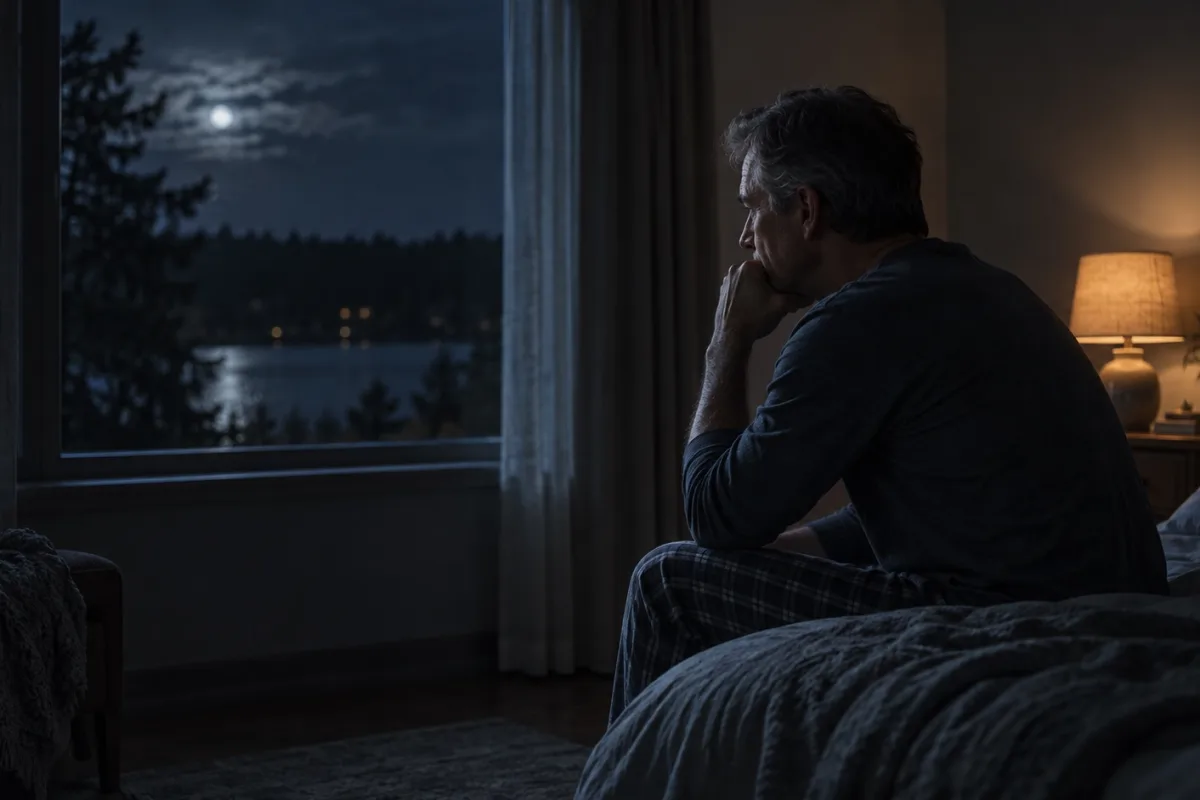
You slept badly, feel unfocused, and then see a headline saying poor sleep is linked to dementia. It is easy to turn a research finding into a frightening prediction about your own future.
The evidence deserves attention, but a restless night is not a diagnosis. Researchers are studying how sleep and brain health influence each other over years. Meanwhile, persistent sleep problems are worth addressing for how they affect your life now.
Why a bad night can affect your thinking today
Disturbed sleep can make concentration, learning, and remembering harder. That is a current effect on how you function; it does not establish an underlying dementia. Illness, pain, mood problems, and sleep disorders can all disturb sleep. NHLBI: sleep and daytime functioning
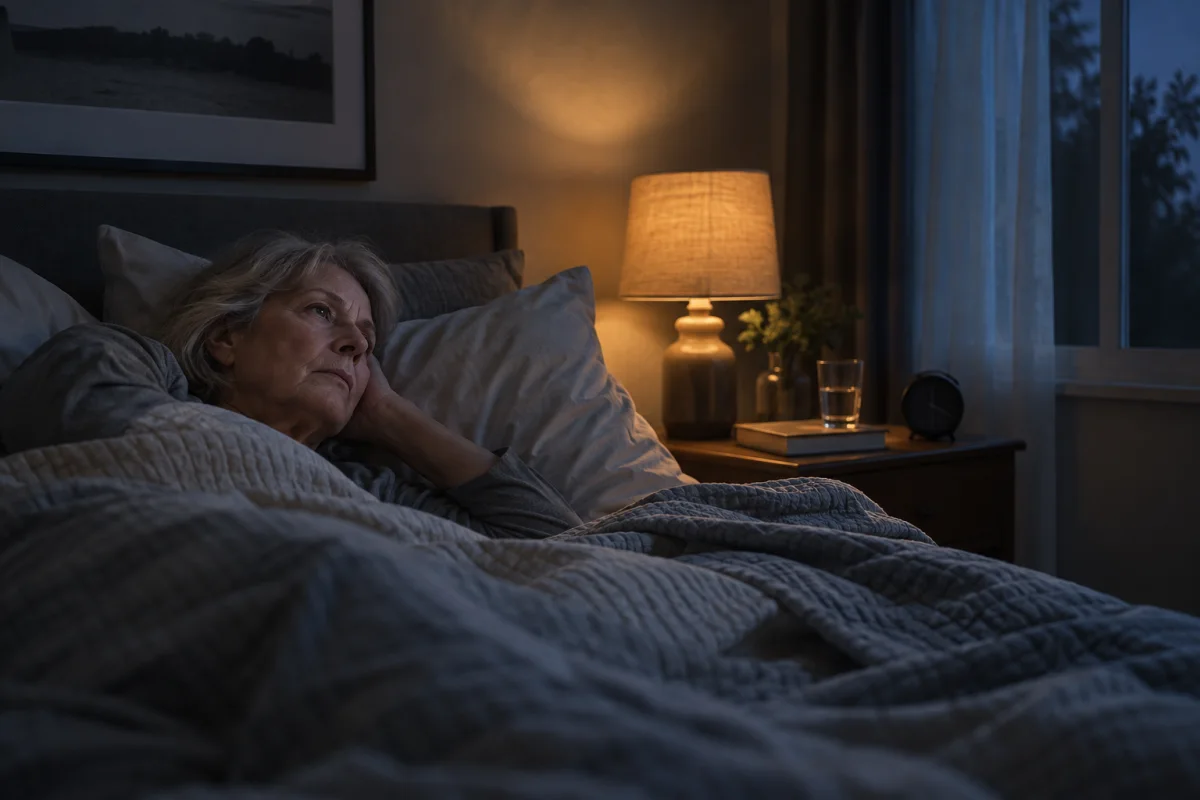
Describe the experience in concrete terms. “I reread emails because I cannot keep track of them after a sleepless night” gives a clearer starting point than “I think I am developing Alzheimer’s.” If the difficulty persists, worsens, or affects ordinary activities, discuss it with a clinician.
One possible contributor does not settle the whole picture. A sleep problem can deserve treatment while a separate thinking or memory concern deserves investigation.
Continue reading: Trying to interpret a memory lapse? Compare ordinary forgetfulness with a recurring change →
What the long-term research found
A study in Nature Communications followed 7,959 Whitehall II participants for about 25 years. Sleep of six hours or less at ages 50 and 60 was associated with higher subsequent dementia risk compared with seven hours. Persistent short sleep across ages 50, 60, and 70 was associated with approximately 30% higher relative hazard after adjustment for several measured factors (hazard ratio 1.30; 95% confidence interval 1.00–1.69). The interval shows uncertainty around the estimate. The study was observational. Sabia and colleagues: sleep duration and dementia
“30% higher relative risk” does not mean a 30% chance of getting dementia or a 30-percentage-point increase. It compares risks between groups. It also does not tell you the result for every person who sleeps six hours.
For illustration only, if a group’s starting risk were 10%, a 30% relative increase would make it 13%, not 40%. Those figures explain relative-risk arithmetic; they are not this study’s estimate of your personal risk. The study reported a hazard ratio, which compares the rate of diagnosis over follow-up and cannot simply be converted into a personal cumulative probability.
| Concept | What it tells you |
|---|---|
| Observed association | Two things occur together more often in a study |
| Causal conclusion | Requires stronger evidence about what produces what |
| Personal prediction | Needs a valid method suited to the individual and time period |
Why an association is not the same as a cause
People who sleep differently may also differ in health, lifestyle, medicines, or circumstances. Researchers can adjust for measured factors, but that does not remove every possible explanation. The direction can be complicated too: processes involved in disease may affect sleep before a diagnosis. The authors discuss the possibility that early disease processes influence sleep and note limitations of the observational design. The original study and its limitations
Ask three questions when reading a headline: Was this an observational study or an intervention? What exactly did researchers measure? Were they studying dementia diagnoses, symptoms, or a biological marker? Those are different outcomes.
A headline about “brain changes” can sound more definitive than the study itself. Before drawing a conclusion, check the population and the time period: a laboratory result after a night awake cannot answer the same question as decades of follow-up.
What about amyloid and the brain’s sleep processes?
Small experimental studies have investigated whether sleep deprivation changes Alzheimer’s-related biomarkers. One study measured overnight amyloid-beta dynamics in cerebrospinal fluid. Another examined brain amyloid measures after one night without sleep. These studies explore biological mechanisms; they do not show that one sleepless night causes Alzheimer’s or predict which individual will develop it. Lucey and colleagues: overnight amyloid dynamics · Shokri-Kojori and colleagues: one-night experiment
The distinction matters because “a marker changed” is not the same outcome as “a disease developed.” You can take sleep seriously without treating every night as a countdown to dementia.
Continue reading: A biomarker is not the whole clinical picture Learn what Alzheimer’s blood tests actually measure →
A sleep problem worth recognizing: obstructive sleep apnea
Sleep apnea can involve repeated pauses in breathing. Signs may include loud snoring, gasping during sleep, and daytime sleepiness. You may not know about nighttime symptoms until someone else notices them. A clinician may recommend a sleep study. Snoring alone does not establish the diagnosis. NHLBI: sleep apnea symptoms

If someone mentions breathing pauses, pass that observation on rather than trying to judge the severity yourself. “My partner notices pauses and gasping, and I struggle to stay alert in the afternoon” is a useful description.
Treatment depends on the assessment and may include positive airway pressure, an oral device, or other approaches. Treating a diagnosed sleep disorder is valuable, but it should not be presented as a guaranteed way to prevent dementia. NHLBI: sleep apnea treatment
How much sleep should you aim for?
NIA advises that older adults generally need seven to nine hours, similar to other adults. Sleep can become lighter or more interrupted with age, but ongoing poor sleep or daytime sleepiness should not simply be accepted as inevitable. Duration is only one part of the picture. NIA: sleep in older adults
Time in bed and time asleep are not the same measurement. “I spend nine hours in bed but lie awake for much of the night” describes a different concern from routinely making time for only five hours.
Try to focus on a sustainable sleep opportunity and how you feel and function rather than forcing a perfect number each night. If the problem persists, bring it to a clinician who can assess its causes.
A practical starting point for better sleep
Consistent sleep and wake times, a comfortable sleeping environment, regular activity, and attention to caffeine and alcohol can support sleep. These are general habits, not a personalized treatment plan. Ongoing insomnia or another sleep disorder may need more than adjustments to a routine. NHLBI: habits and treatment for sleep difficulties
Choose one manageable change rather than redesigning your entire life overnight. You might make your wake time more consistent or discuss a recurring nighttime problem. Keep the goal concrete: better sleep and daytime functioning, not achieving a score that promises protection from disease.
If you work irregular hours, care for someone overnight, or have ongoing pain, tell the clinician about those constraints. Useful advice should fit the circumstances in which you actually sleep.
Persistent insomnia is treatable
Cognitive behavioral therapy for insomnia, or CBT-I, is a structured treatment that addresses sleep-related patterns and thoughts. NHLBI describes it as a usual first treatment for long-term insomnia. It is more than a list of general sleep tips. Medicines may be considered according to the individual situation. NHLBI: insomnia treatment
Ask: “Could this be insomnia or another sleep disorder?”, “Would CBT-I be appropriate?”, and “Could any of my medicines contribute?” Do not start, stop, or increase a sleep medicine based on a dementia headline.
A persistent sleep problem deserves a plan you can revisit. That plan can focus on sleep without making unsupported promises about future dementia.
What to note before an appointment
A simple, unscored sleep note
- Approximate bedtime, wake time, and time spent awake at night
- Whether the main difficulty is falling asleep, staying asleep, or staying alert during the day
- Any reported snoring, gasping, or breathing pauses
- Recent changes in medicines, alcohol or caffeine use, illness, pain, or routine
- Examples of daytime difficulties and how they affect ordinary tasks
This is preparation for a discussion, not a diagnostic test. You do not need a wearable, paid report, or perfect diary before asking for help.
Questions people often ask
Have a few bad nights permanently damaged my brain?
The studies discussed here do not establish that a few bad nights cause permanent damage or dementia. Address ongoing sleep problems and seek assessment for persistent cognitive changes.
Can sleeping more reverse Alzheimer's?
There is no basis for presenting more sleep as a cure for Alzheimer’s. Improving sleep may help well-being and daily functioning, while a diagnosed disease requires its own care plan.
Does a wearable's “deep sleep” number tell me my dementia risk?
The research described here does not validate a consumer sleep score as an individual dementia predictor. A device reading cannot replace assessment of symptoms and sleep problems.
What if memory problems continue when sleep improves?
Discuss that with a clinician. Keep concrete examples of the change and its impact, and avoid assuming that sleep explains every symptom.
Treat the sleep problem you have today
You can take a long-term association seriously while keeping the immediate action proportionate. Make sleep a health priority, seek help for persistent sleep difficulties, and arrange assessment for thinking changes that continue or disrupt everyday life.
Evidence base
Sources
Continue reading

Normal forgetfulness or dementia? How to understand the difference
Compare manageable memory lapses with persistent cognitive changes, understand mild cognitive impairment, and prepare for assessment.
· 8 min read
The first signs of dementia: what changes are worth noticing?
Understand early dementia symptoms, everyday examples, other possible causes, and when to seek a medical assessment.
· 8 min read
Can a blood test detect dementia? What Alzheimer’s tests can and cannot show
Understand Alzheimer's biomarker blood tests, routine blood work, FDA-cleared test use, false results, and questions to ask your clinician.
· 9 min read