A Minds Vary guide Depression & Mood
A Light Box for Winter Mood: What to Check Before Buying
Considering a light box for winter low mood? Check its intended use, UV filtering and instructions, then discuss eye health, medicines and suitability.
 Written byVitaly Chopik
7 min read

Educational information for everyday wellbeing. Clinical review is recommended; this guide has not been clinically reviewed. Our review standards
In this guide
- Check the purpose before comparing features
- Bring the health question before the shopping question
- Make a small product-information sheet
- Treat numbers as specifications, not a personal schedule
- Check whether the setup fits your real space
- Leave the conversation with clear next steps
- Common questions
- Sources & further reading
The starting point
A few things to keep in mind
Check the exact purpose and instructions: a lamp for skin treatment, an ordinary desk lamp and a SAD light box are different products.
Ask a qualified clinician about suitability, particularly with eye problems, light-sensitive medicines or a history of unusually high energy and reduced need for sleep.
A product listing cannot diagnose seasonal depression or supply your personal treatment schedule; significant low mood deserves assessment without waiting for a purchase.
A bright panel can look like a straightforward purchase when darker months feel difficult. But “winter mood lamp” is a shopping phrase, not enough information to decide whether a device is appropriate for you. Before buying, separate three questions: what the product does, whether light therapy fits your health situation, and how a suitable treatment would actually be used.
This guide helps adults gather product information and prepare that conversation. It does not diagnose seasonal depression, recommend a brand or prescribe exposure intensity, timing, distance or duration. You can leave the purchase undecided while you get a useful answer.
Check the purpose before comparing features
Mayo Clinic’s light-box guidance distinguishes products intended for seasonal affective disorder from lamps used for skin conditions. Skin-treatment lamps may emit ultraviolet light. They are not interchangeable with a SAD light box, which should filter out most or all UV light.
Look for the manufacturer’s stated intended use for the exact model. A cheerful photograph, “full spectrum” wording or an ordinary room-lighting description does not answer that question. If the purpose or UV information is unclear, ask the manufacturer for the instructions and safety information before purchasing.
Do not experiment with a tanning lamp, skin-treatment device or brighter household bulb as a substitute. This is a check of product identity, not a suggestion to improvise treatment from something already at home.
Bring the health question before the shopping question
NIMH explains light therapy in the context of winter-pattern seasonal affective disorder, alongside other treatment options. Feeling low in winter does not by itself establish that diagnosis or make a light device the right first choice. Your current symptoms, history and existing care matter.
Ask a qualified health professional whether light therapy is appropriate before starting. Mention eye conditions, medicines that may increase light sensitivity, and any history of bipolar disorder or periods of unusually high energy with much less need for sleep. Mayo Clinic specifically advises careful clinical discussion with bipolar disorder and advice from an eye specialist when relevant eye problems are present. NIMH also flags eye disease and light-sensitizing medicines.
You do not need to decide which item in your history is a contraindication. Bring the information and let the responsible professional assess it. Recognizing a seasonal mood pattern and choosing a device are different tasks. This guide focuses on the device decision, not on establishing a diagnosis.
Make a small product-information sheet
Save information about one actual model rather than collecting dozens of advertisements. The following sheet is an original way to organize a conversation, not a device certification checklist or proof that a product is safe for you.
| Item | What to record | Who can clarify it |
|---|---|---|
| Identity | Manufacturer, exact model and intended purpose | Manufacturer or official instructions |
| UV information | The stated filtering or emission information; mark missing details unknown | Manufacturer, with clinical advice about relevance |
| Use instructions | The actual document, including placement and warnings | Manufacturer and responsible clinician |
| Practical setup | Where it could sit securely and whether the instructions fit that space | You, using the actual instructions |
| Personal question | Eye history, medicines or a concern about past mood changes | Relevant clinician, pharmacist or eye specialist |
| Purchase terms | Price, return conditions and what remains unanswered | Retailer or manufacturer |
Keep health history in your private note, not a public product review or an unnecessary message to a seller. A seller can explain a return policy. It cannot determine your diagnosis or whether a medicine makes a treatment suitable.
Treat numbers as specifications, not a personal schedule
A listing may show a brightness number in lux. A number without the conditions under which it was measured is incomplete information. Save the manufacturer’s stated distance and instructions so the clinician can see what the claim refers to. Do not assume that two products with the same headline number have identical instructions.
Likewise, advice copied from another person’s routine is not your plan. Ask who will establish the appropriate use, how it fits your ordinary day and what to do if you have a problem. This article deliberately does not convert general examples from health websites into an exposure prescription.
A practical question might be: “Here is the model and its instruction sheet. Is this approach appropriate for me, and what would I need to know before using it?” If the response only repeats the advertisement, the health question is still unanswered.
[!CALLOUT:note] Buying a device and having a care plan are separate steps An order confirmation proves a purchase. It does not confirm suitability, establish a diagnosis or tell you how to change existing treatment.
Check whether the setup fits your real space
If a professional considers light therapy appropriate, review the actual setup with the product instructions. Is there a stable surface? Could the device be positioned as instructed without blocking a shared workspace? Can the cable be kept out of a walking route? These are practical questions, not permission to choose a new distance or compensate with extra time.
Consider limitations before paying: a shared room, limited table space, visual discomfort with bright environments, or a work schedule that makes an assumed routine unrealistic. Tell the clinician about the constraint rather than buying first and trying to force life around the product.
You can also ask the retailer about returns without committing to use. If essential information is missing or the setup cannot work, leaving the purchase open is a reasonable outcome. A smaller, cheaper or more portable device is not automatically a clinically equivalent substitute.
Leave the conversation with clear next steps
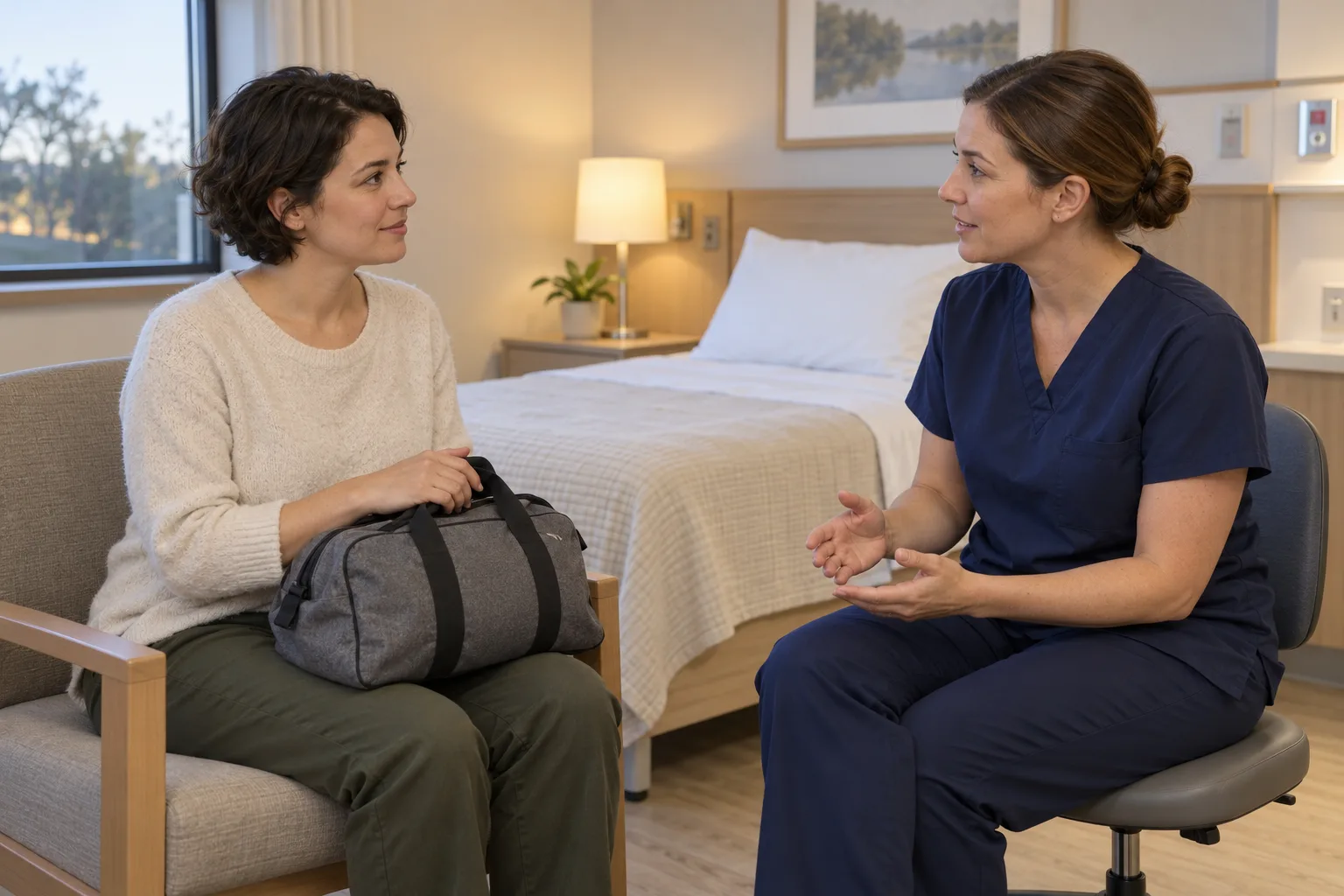
NIMH’s appointment guidance recommends preparing questions and a list of medicines, including nonprescription products and supplements. Bring your product sheet with that information. Ask how any agreed approach would be reviewed and which changes or discomforts should prompt contact.
Do not stop medicines, add supplements or intensify light exposure on this guide’s advice. If you already use a device and something worries you, contact the responsible professional for instructions rather than increasing use to chase an effect.
Significant low mood, loss of interest or difficulty managing daily life needs attention whether or not you buy anything. Our low mood and depression article provides broader context. If you cannot stay safe or there is immediate danger, use local crisis or emergency help now. For other support routes, see Get Help.
Common questions
Is an ordinary bright lamp the same as a SAD light box?
No. Intended purpose, light output, filtering and instructions can differ. Do not treat room lighting or a skin-treatment lamp as an interchangeable treatment device. Check the exact model and discuss suitability.
Can I use someone else’s light-therapy schedule?
Do not assume their timing, distance or duration fits your device or health situation. Ask the responsible clinician and use the exact product instructions as part of that discussion.
Do I need to buy something before asking for help with winter mood?
No. You can discuss current symptoms and daily impact without buying a device or proving a seasonal diagnosis yourself. Assessment and support do not depend on completing a shopping decision.
Behind this guide
Sources & further reading
Written by Vitaly ChopikMinds Vary · Editorial standards